
Rutgers School of Environmental and Biological Sciences (SEBS) and the New Jersey Agricultural Experiment Station (NJAES) have a long history of research and education in the field of soil science including ground-breaking discoveries such as streptomycin which saved millions of lives. In the past 20-30 years, the concept of assessing overall soil quality has developed within […]
Research
New Study Sheds Light on Origins of Life on Earth

Addressing one of the most profoundly unanswered questions in biology, a Rutgers-led team has discovered the structures of proteins that may be responsible for the origins of life in the primordial soup of ancient Earth. The study appears in the journal Science Advances. The researchers explored how primitive life may have originated on our planet from simple, non-living materials. They […]
Bluefin Tuna Reveal Global Ocean Patterns of Mercury Pollution
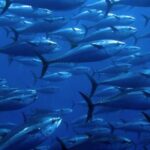
Bluefin tuna, a long-lived migratory species that accumulates mercury as it ages, can be used as a global barometer of the heavy metal risk posed to ocean life and human health, according to a study by Rutgers and other institutions. The study appears in the journal PNAS. Bluefin tuna, one of the largest and fastest fish species on […]
Rachael Shwom Co-authors Study Showing Carbon Labels Can Be Part of Climate Change Solution

Carbon labels can be an effective measure to change consumer and corporate behavior as the growing threat of climate change progresses, according to newly published research by Rachael Shwom, associate professor in the Department of Human Ecology, and a team of co-authors. Shwom, who is also the acting director of the Rutgers Energy Institute, conducts […]
Distinguished Professor Dipak Sarkar Ranked Among Top Expert in Pro-Opiomelanocortin
Dipak Sarkar, Distinguished Professor in the Department of Animal Sciences, has been recognized as an Expertscape world expert in pro-opiomelanocortin. This peptide molecule produces multiple hormones including beta-endorphin, α-melanocyte stimulating hormone, and adrenocorticotropic hormone. These hormones are made mainly in the brain and regulate many body functions including feeling good, addiction, stress control, metabolic regulation […]
Rutgers Professor Pamela McElwee Among Co-Chairs Named to Two New Global IPBES Assessments

Pamela McElwee, professor in the Department of Human Ecology at the Rutgers School of Environmental and Biological Sciences, was among six new co-chairs named today by the Intergovernmental Platform on Biodiversity and Ecosystem Services (IPBES) to lead work on two major new multi-year international scientific assessments. McElwee is one of three co-chairs to lead the […]
Gulf Stream is the weakest in 1,000 years; that could drive more Jersey Shore flooding
Robert Kopp – Department of Marine and Coastal Sciences
Plants are Stuck as Seed-Eating Animals Decline
Alexa Fredston – Department of Ecology, Evolution and Natural Resources
Rutgers Professor Mark Miller Studies Marine Cloud Systems to Better Understand Their Role in a Warming Climate
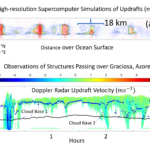
Marine cloud systems are a critical component of the Earth’s climate system because they reflect incoming sunlight that would otherwise heat the ocean below. Solid overcast over northern latitude ocean regions yields to partly cloudy skies in the tropics, while the mid-latitudes serve as a transition between these two marine cloud regimes. While there is a […]
Rutgers Study Unveils New Carbon Mitigation Solutions to Combat Climate Change
Increasing adoption of agricultural practices such as cover cropping, grazing management and agroforestry can increase the amount of carbon stored in soils to help combat climate change, according to a new report by researchers from Rutgers University-New Brunswick and the University of Maine. The study, titled “Ecosystem Service Valuation Approaches and Carbon Mitigation Considerations for […]