

Long before leaving port, Rutgers oceanographers Joe Gradone and Corday Selden are focused on packing crates of sensors, autonomous underwater gliders and instruments—some “as delicate as a potato chip”—for a mission to probe one of the ocean’s most elusive processes. In August 2026, the pair will lead a 28-day expedition aboard the state-of-the-art R/V Falkor […]
Research
New Documentary Captures the Perspectives of Scientists as Rising Sea Levels Threaten the Rutgers University Marine Field Station
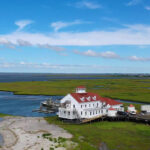
Marine scientists in Tuckerton, N.J., are witnessing firsthand how rising ocean waters will one day permanently shut down their research station. The researchers share their thoughts on eventually losing this critical hub of marine and coastal research in Marine Field Station: The Retreat, a 10-minute documentary made by a Rutgers University-New Brunswick professor and his production crew […]
Marine Geoscientists Link Warming with Ancient Ocean ‘Salty Blob’
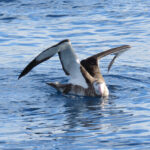
In a groundbreaking study of ancient ocean geochemistry, a Rutgers researcher and a former Rutgers graduate student have found evidence that the end of the latest ice age some 18,000 years ago, a period of rapid planetary warming, coincided with the emergence of salty water that had been trapped in the deep ocean. The findings, published […]
New Partnership Will Revitalize Ocean Research Off the Jersey Shore
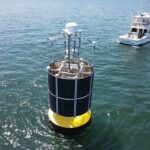
Rutgers University and Stockton University have joined forces with the New Jersey Economic Development Authority and marine technology company Ocean Power Technologies Inc. to restart and modernize a historic ocean research program off the Jersey Shore, marking a major investment in coastal science, workforce development, and marine innovation. The partnership will revive the Long-Term Ecosystem […]
A Surprising Ice Age from Three Million Years Ago Shows Lessons for Today

About 3.3 million years ago, during a period called the Pliocene epoch when Earth’s atmosphere contained CO₂ levels similar to today’s, a short but intense cooling event occurred that scientists call Marine Isotope Stage M2. Understanding what happened during this 25,000-year period matters today because it reveals how sensitive ice sheets are to changes in […]
Rutgers Scientists Honored at AGU with Prestigious Flinn Award

Rutgers scientists John Wilkin, professor, and Hernan Arango, research programmer, in the Department of Marine and Coastal Sciences (DMCS) along with Andrew Moore, professor at University of California-Santa Cruz, have been honored by the American Geophysical Union (AGU) with its 2025 Edward A. Flinn III Award. A coveted AGU honor for mid-career or senior scientists, the […]
Why Energy Efficiency Alone Won’t Solve Our Climate Problems

When countries make plans to fight climate change, they often focus heavily on energy efficiency—making buildings, appliances, and vehicles use less energy. But a new study suggests this approach might be missing the bigger picture. Affiliates of the Rutgers Climate and Energy Institute, Clinton Andrews, Distinguished Professor at the Bloustein School of Planning and Public […]
Empowering Young Innovators to Lead the Way to a Sustainable Future

What if the key to solving our planet’s biggest challenges lies with young people? A new study shows that empowering youth to develop innovative solutions could accelerate progress toward global sustainability goals—but only if we give them the right support and opportunities. Wendy Purcell, professor at Rutgers School of Public Health and affiliate of the Rutgers […]
Turning Liquid Fuel into Clean Energy: A New Cobalt Catalyst Could Help Power the Future

A new study has found a better way to turn a common liquid chemical into clean energy, and it could help us move away from fossil fuels. Kate Waldie, associate professor in the Department of Chemistry and Chemical Biology at Rutgers University and an affiliate of the Rutgers Climate and Energy Institute, is a co-author on […]
Plant Biologist Elected to National Academy of Inventors, Receives Highest Honor for His Work

The Rutgers plant biologist was elected to the 2025 Class of the National Academy of Inventors When basil crops across the United States began collapsing 15 years ago, farmers were desperate. A mysterious strain of downy mildew began wiping out crops with no treatments, no way to stop the disease from spreading and no basil […]