

The schoolyard at the Lincoln Annex School on Somerset Street in New Brunswick was abuzz on a chilly day in October. The clackety clack of a prize wheel and delighted cries of children claiming their apples and mini pumpkins gave the aura of a carnival, however this festivity was actually a health and wellness-based farmers […]
Rutgers Climate Scientist Studies Sea-Level Change Dating Back to the Age of the Dinosaurs

The Rutgers Climate Institute comprises more than 100 distinguished researchers representing 17 schools and programs in the natural and social sciences as well as the humanities. As observers of the natural world, they have been among the first to sound alarms about the potentially catastrophic impact of the earth’s changing climate – from rising sea levels and […]
Science: Over a Century in the Making
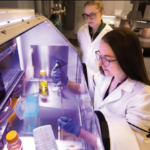
The Department of Biochemistry and Microbiology has a rich history, established in 1901 as the Department of Soil Chemistry and Bacteriology, and one of the first of its kind in the country. Today, it builds on this vibrant history by focusing on the environmental aspects of microbiology, biochemistry, and toxicology through two under-graduate programs and […]
Make a Difference in Your Community – Become a Rutgers Environmental Steward
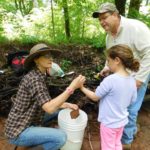
Registration is open for the 2019 Rutgers Environmental Stewards program – a great gift for your family’s environmentalist or…a great way to back up your New Year’s “Green” resolution. Since 2005, hundreds of volunteers have made the commitment to protecting New Jersey’s environment by participating in the Rutgers Environmental Stewards Program. Offered by Rutgers Cooperative Extension, […]
Go Fish!
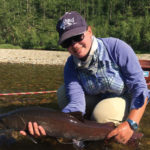
Olaf Jensen’s research on Mongolian fisheries has shed light on the effects of climate change, and opened a world of opportunity for students. Faculty Perspective: Olaf Jensen, Department of Marine and Coastal Sciences What initially attracted Olaf Jensen to Mongolia was its population of a unique fish called taimen. It’s the largest species of trout […]
Rutgers EOAS Projects Wet and Dry Weather Extremes with Global Warming
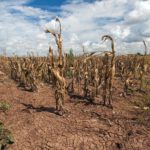
Rutgers-led study examines role of stationary low- and high-pressure systems Global warming is projected to spawn more extreme wet and dry weather around the world, according to a Rutgers-led study. Those extremes include more frequent dry spells in the northwestern, central and southern United States and in Mexico, and more frequent heavy rainfall events in […]
Earth in Balance
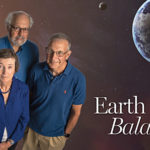
Accelerating changes in the climate are a growing concern. Scientists at the Rutgers Climate Institute are evaluating the peril on many fronts. Jennifer Francis was 22 years old when she and her future husband embarked on a five-year sailing voyage around the world that forever altered her life. Francis had always nurtured an abiding interest in the […]
Equine Science Center Hosts “Evening of Science and Celebration”

2019 “Spirit of the Horse Award” Presented to Kennis “Buttons” Fairfax and 2019 “Gold Medal Horse Farm Award” Presented to Mortonhouse Farm The Rutgers Equine Science Center hosted its 2018 “Evening of Science & Celebration” on Thursday, November 8 in New Brunswick, NJ. Sponsored by Mid-Atlantic Equine Medical Center, this year honored Kennis “Buttons” Fairfax, a renowned […]
Mukund Karwe Elected a Fellow of the International Academy of Food Science and Technology
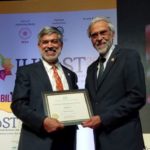
Mukund Karwe, professor of food science, was elected a fellow of the International Academy of Food Science and Technology (IAFoST)—one of 20 new fellows and two from the U.S.—to be inducted during the 19th World Food Congress held in Mumbai, India, from October 23-27. The academy is a statutory component of the International Union of Food […]
What You Need to Know About the Latest U.N. Climate Change Report

Climate scientist Robert Kopp explains the findings of the latest report by the Intergovernmental Panel on Climate Change including the need to achieve net-zero carbon emissions The United Nations scientific panel on climate change recently released a major report that examined the benefits of trying to limit global warming to 1.5 degrees Celsius above nineteenth-century […]