
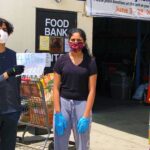
One of the many devastating challenges of COVID-19 has been the increased demand on food banks across the nation, paired with many families’ inability to donate like they historically would. This combination encouraged Somerset County 4-H Piano & Music Club to use their experience as community leaders to aid the Somerset Food Bank, and in […]
Virologist Christopher Mores (CC’95) Spends His Days ‘Hunting The Thing That Wants To Hunt Us’
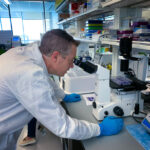
As the novel coronavirus continues its global rampage, scientists around the world are racing to stop its spread. Dozens of projects have been launched under great pressure to deliver a vaccine as quickly as possible. Among the virologists trying to unlock the pathogen’s secrets is Christopher Mores, the director of a new lab devoted to […]
Oyster Farming and Shorebirds Likely Can Coexist
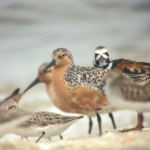
Scientists find oyster aquaculture has little impact on red knots, three other species Oyster farming as currently practiced along the Delaware Bayshore does not significantly impact four shorebirds, including the federally threatened red knot, which migrates thousands of miles from Chile annually, according to a Rutgers-led study. The findings, published in the journal Ecosphere, likely […]
Rutgers alumna and veterinarian offers insights on keeping our furry friends happy and healthy during the COVID-19 pandemic

The COVID-19 pandemic shifted many veterinary clinics from routine to emergency-only appointments – leaving pet owners to address minor injuries and basic grooming issues normally resolved by professionals. Veronica Jones, D.V.M., an emergency medicine veterinarian at NorthStar VETS in Robbinsvile, N.J., and a 2009 graduate of the School of Environmental and Biological Sciences, says pet owners […]
New Research by Rutgers Scientists Reaffirms Modern Sea-Level Rise Linked to Human Activities
Surprisingly, Earth had nearly ice-free conditions with carbon dioxide levels not much higher than today and had glacial periods in times previously believed to be ice-free over the last 66 million years, according to a paper published in the journal Science Advances. “Our team showed that Earth’s history of glaciation was more complex than previously thought,” said lead […]
2020 SEBS Virtual Convocation Remarks by Executive Dean Robert M. Goodman
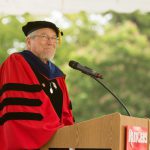
My heartfelt congratulations to each of you in the Class of 2020! You are the 152nd graduating class from our school—the Rutgers School of Environmental and Biological Sciences. Also, I extend my sincere hopes that you and your loved ones are safe and healthy. If there ever was evidence that the world needs a flood […]
2020 SEBS Virtual Convocation Remarks by Dean of Academic Programs Laura Lawson

Thank you, Jeremy Posluszny, Class Representative, for speaking so warmly on behalf of your fellow classmates. I extend my congratulations and best wishes to the more than 723 graduates who make up the SEBS Class of 2020. I offer a special “thank you” to the parents for your sacrifice, and to extended family and friends for your support of these accomplished men and women who persevered through […]
2020 SEBS Virtual Convocation Remarks by Class Representative Jeremy Posluszny
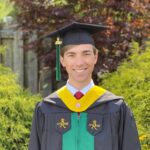
BEYOND THE SYLLABUS Welcome, graduates, faculty, staff, family, and friends. I’m Jeremy Posluszny, an environmental and business economics major here at the School of Environmental and Biological Sciences. I am honored to address you today at our historic S.E.B.S. Convocation Ceremony. Though we may not be able to celebrate in person with each other, the screens and masks between us do […]
NJHKI Steps Up During Lockdown, Assisting GBCS With Food Deliveries
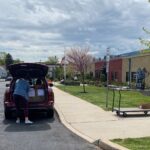
For the past few years, the New Jersey Healthy Kids Initiative (NJHKI) has partnered with Greater Brunswick Charter School (GBCS) in New Brunswick to provide nutrition education, culinary literacy, and physical activity programs and activities to its students. This has included biweekly field trips for kindergarten and seventh graders to attend the New Jersey Institute for […]
SEBS and NJAES Executive Leadership Team Statement for Racial and Social Justice
Dear SEBS and NJAES community, The tension, anger, and frustration of this moment requires us to acknowledge that racial inequality persists in our society and that we need to escalate our work to address it head-on. In the last couple weeks, our nation and the world have witnessed several gruesome injustices against African Americans that […]