

Transferring to Rutgers University from a New Jersey community college is a common and successful pathway for many students, aided by statewide articulation agreements that are designed to streamline the process. Abbey Isaac SEBS’25 has made that transition and feels she has a lot to offer other students contemplating that transfer journey. Right out of […]
Rutgers Environmental Stewards Celebrates its 20th Anniversary at Impact Summit on Nov 1
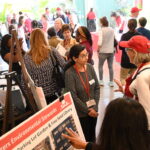
The Rutgers Environmental Stewards Program, a certificate program that trains adult volunteers on important environmental issues in New Jersey in areas such as sustainable climate change solutions, storm water management, and habitat conservation marks its 20th anniversary this year. The milestone will be celebrated at the program’s annual Impact Summit on November 1 at the […]
Using AI to Better Monitor Rising Seas and Flood Risks

Coastal communities are on the frontlines of climate change. Rising seas, stronger storms, and more frequent flooding put homes, infrastructure, and lives at risk, especially social and economically vulnerable communities, such as Puerto Rico. A new study published in Scientific Reports introduces an innovative, AI-powered framework to track and analyze coastal water levels in places […]
Cool Roofs Offer Hope Against Extreme Heat in Rural Africa

As the planet warms, communities around the world are looking for simple, affordable ways to stay safe in rising temperatures. In rural Burkina Faso, where homes can be up to 10 degrees hotter inside than the air outside, residents face dangerous heat nearly all year round. A new study, published in BMC Public Health, explored […]
SEBS Gilman Scholars Embarked on Transformative Global Experiences

Three students from the School of Environmental and Biological Sciences (SEBS) were among a record 20 Rutgers students awarded a Benjamin A. Gilman International Scholarship. Named in honor of the late Congressman Benjamin Gilman, a champion for international education, the scholarship was established in 2001 by the U.S. Department of State’s Bureau of Educational and Cultural […]
Teens Learn Urban Farming, Food Distribution While Giving Back to the Community

This article first appeared in Kearny Life Community Magazine and is reproduced with permission from the author, Jaimie Julia Winters. When teens Ester Fernandez and Zulema Vargas were looking for something to do this summer, they decided on something that would get their hands dirty while giving back to their community. “I was looking for […]
Keeping Oyster and Clam Farms Safe from Disease

A new study in Aquaculture looked at how tiny oysters and clams (called seed) can carry diseases when moved between hatcheries and farms. The authors wanted to find out which life stages are most at risk, and how careful water treatment can help protect both farmed and wild shellfish. David Bushek, an affiliate of the […]
Research Center Administrators Society Fall Meeting Showcases Innovation and Collaboration Across New Jersey’s Agricultural Research Network
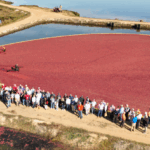
Rutgers University hosted the 2025 Fall Meeting of the Research Center Administrators Society (RCAS)—a national organization dedicated to the professional development and collaboration of administrators who manage agricultural research and experiment stations across the United States. Held from September 21–24, the meeting welcomed approximately 80 participants from across the United States—from California and Florida to […]
What Happens When Wind Farms Get Old?

As more wind farms around the world get older, big decisions need to be made: should they keep running, be upgraded with new parts, or be shut down completely? Answering these questions requires accurate assessments of their reliability—how frequently failures occur and how costly those failures are. A new study in the journal Wind Energy […]
What Bees Can Tell Us About Conservation and Land Use

A new study has challenged a long-held belief in ecology: that a bee’s body size determines how far it travels and, in turn, how much land around it matters. The authors of the study, published in Ecography, tested this idea—called the “mobility hypothesis”—by analyzing 84 species of wild bees across 165 sites in the northeastern […]