

Plants are remarkably good at adjusting how they capture sunlight and produce food through photosynthesis. A new computer model helps scientists better understand these adjustments by looking at what happens at different heights within a plant canopy, from the sun-drenched leaves at the top to the shaded leaves near the ground. Chi Chen, assistant professor […]
Rutgers Hosts 35th Annual Turfgrass Symposium

The Rutgers Center for Turfgrass Science hosted its 35th Annual Turfgrass Symposium on March 19, bringing together faculty, students, researchers and industry leaders for a day of collaboration, innovation and knowledge exchange. Held at Rutgers University–New Brunswick, the symposium highlighted the breadth of turfgrass research underway across the university while reinforcing Rutgers’ leadership in advancing […]
Teaching Robots to Fly Like Birds

A bird banking in a crosswind doesn’t rely on spinning blades. Its wings flex, twist and respond instantly to its environment. Engineers at Rutgers University have taken a major step toward building bird-like drones that move the same way, flapping their wings like real birds, using electricity-driven materials instead of conventional electromagnetic motors to power […]
New Jersey Kids Care About the Planet — But Don’t Connect It to What’s on Their Plates

Ask a New Jersey middle schooler what they think about when choosing what to eat, and you’ll probably hear: taste, texture, and whether it’ll upset their stomach. Ask them what they do to help the planet, and they’ll mention picking up litter or recycling. What most won’t mention? The connection between the two. A new […]
Scientists Develop New Gut Health Measure That Tracks Disease

Scientists have identified a new way to distinguish healthy guts from diseased ones and track how some illnesses progress by measuring how gut bacteria interact with one another. According to a study published in Science, a Rutgers-led team of scientists found that healthy and diseased digestive systems behave like two distinct ecological states, driven not by individual microbes but […]
Will Melting Glaciers Slow Climate Change?
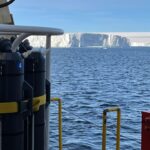
For scientists who study the Southern Ocean, a long-standing silver lining in the gloomy forecast of climate change has been the theory of iron fertilization. As temperatures rise and glaciers in Antarctica melt, ice-trapped iron would feed blooms of microscopic algae, pulling heat-trapping carbon dioxide from the atmosphere as they grow. There’s just one problem: The theory doesn’t […]
Haskin Lab Strengthens Oyster Industry Through Research and Collaboration

The Haskin Shellfish Research Laboratory has played a central role in supporting New Jersey’s oyster industry through decades of research, collaboration, and science-based management. Since 1953, the lab has worked closely with the Delaware Bay oyster industry and the New Jersey Department of Environmental Protection Division of Fish and Wildlife to address challenges affecting oyster […]
Wind Turbines and Fish: Can the East Coast Have Both?

Miles off the coast of New Jersey and New England, two major forces are converging: the rapid expansion of offshore wind energy and some of the most valuable fisheries in the United States. A new editorial published in Fisheries Oceanography takes stock of what we know — and what we urgently need to find out […]
Scientists Document Fight Against Basil Disease in New Video Series
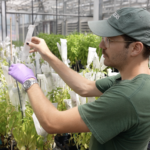
In laboratories and greenhouses at Rutgers University-New Brunswick – alongside collaborators at the University of Massachusetts Amherst, University of Florida and Bar-Ilan University – scientists are advancing plant breeding innovations to protect one of the world’s most widely used herbs: basil. Now, supported by a $3.2 million grant from the U.S. Department of Agriculture’s National […]
Scientists Prove Shellfish Can Be Farmed Far From Shore
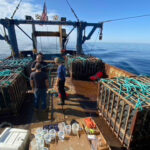
Rutgers researchers have made a discovery that could change the future of seafood farming in New Jersey. A study led by marine scientist Daphne Munroe has shown that Atlantic surfclams can be successfully farmed in the open ocean. Her research, published in the North American Journal of Aquaculture, proves that offshore aquaculture is not only possible but promising. This […]