
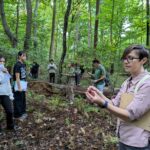
Allyson Salisbury, assistant teaching professor in the Department of Ecology, Evolution, and Natural Resources at Rutgers University-New Brunswick, is the recipient of the 2025 International Society of Arboriculture (ISA) Early-Career Scientist Award. This Award of Distinction recognizes an individual who shows exceptional promise, with high potential to become an internationally recognized scientist. The ISA Awards […]
SEBS
Amino Acid Shortage Disrupts Vitamin A Distribution, Rutgers Study Finds
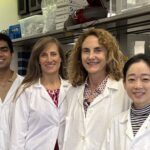
Groundbreaking PNAS research reveals a new pathway regulating vitamin A mobilization from the liver—independent of vitamin A status. Researchers at Rutgers University have discovered that amino acid scarcity—whether caused by diet or chemotherapy—impairs the liver’s ability to release vitamin A into the bloodstream, revealing a previously unrecognized mechanism for controlling vitamin A availability in the […]
Climate Intervention Techniques Could Reduce the Nutritional Value of Crops, New Study Finds

A new study published in the journal, Environmental Research Letters, reports that cooling the planet by injecting sulfur dioxide into the stratosphere—a proposed climate intervention technique—could reduce the nutritional value of the world’s crops. Scientists at Rutgers University used global climate and crop models to estimate how stratospheric aerosol intervention (SAI), one type of solar […]
Cultural Perspectives Key to Climate Resilience and Health in Immigrant Communities

A new study published in Journal of Immigrant and Minority Health reveals how cultural values and community ties shape the health, resilience, and well-being of immigrant communities—especially when facing natural disasters that are becoming more frequent and intense due to climate change. Victoria Ramenzoni, associate professor in the Department of Human Ecology and an affiliate […]
How Plants Remember Stress: A Key to Surviving Heat Waves

As global temperatures rise and heat waves become more common, farmers and gardeners face a growing challenge: how to keep plants healthy when it’s scorching hot. A new study offers hope by showing that plants can actually “remember” past stressful experiences and use that memory to better handle future heat. Bingru Huang, Distinguished Professor in […]
From Research to Recreation: Rutgers Dawn Redwoods Revitalize Boardwalk at Rutgers Gardens
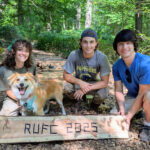
October 23 marked an exciting milestone for the Rutgers Urban Forestry program and Forestry Club with the successful completion of a collaborative project that turned reclaimed wood into a revitalized trail at Rutgers Gardens. With help from Rutgers Gardens staff, interns and volunteers, 120 feet of new boardwalk was completed—blending research, learning and sustainability into […]
Distinguished Professor Eric Lam Awarded 2025 Agriculture Innovation Award

Eric Lam, Distinguished Professor in the Department of Plant Biology, was the recipient of the Agriculture Innovation Award at the Rutgers Office of Research banquet on Oct 7, celebrating the 2025 awards winners with peers, industry executives and Rutgers University leadership. The Rutgers Innovation Awards, hosted by the Rutgers Office for Research for the second […]
NJ Governor’s STEM Scholars Explore Sustainability and Science at Rutgers SEBS

Rutgers School of Environmental and Biological Sciences (SEBS) recently welcomed students from the prestigious Governor’s STEM Scholars program for an immersive day of scientific exploration and sustainability-focused learning. The program was hosted at the Ludwig Global Village Living Learning Center and featured a full day of activities focused on the United Nations Sustainable Development Goals. The […]
Ocean Currents Act Like Underwater Highways, Delivering Food to Antarctic Wildlife

In Antarctica’s frigid waters, tiny shrimp-like creatures called krill are the foundation of the entire ocean food web, feeding everything from penguins to whales. But how do these krill—and the microscopic plants they eat—end up in the right place at the right time? A new study reveals that ocean currents act like invisible highways, concentrating […]
Celebrating Nicki Graf CC’77 and Her 37-Year Career of Cultivating Plants and People at Rutgers
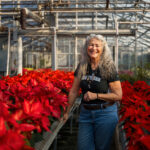
Perhaps as iconic to Cook Campus as Passion Puddle and the Rutgers Farm, the Floriculture Greenhouse with its towering smokestack has long been a joyful place for plant-minded people at Rutgers. One of the oldest buildings on Cook campus, the Floriculture Greenhouse originally served as a research station focusing on cut flower production and preservation […]