

The schoolyard at the Lincoln Annex School on Somerset Street in New Brunswick was abuzz on a chilly day in October. The clackety clack of a prize wheel and delighted cries of children claiming their apples and mini pumpkins gave the aura of a carnival, however this festivity was actually a health and wellness-based farmers […]
Rutgers Climate Scientist Studies Sea-Level Change Dating Back to the Age of the Dinosaurs

The Rutgers Climate Institute comprises more than 100 distinguished researchers representing 17 schools and programs in the natural and social sciences as well as the humanities. As observers of the natural world, they have been among the first to sound alarms about the potentially catastrophic impact of the earth’s changing climate – from rising sea levels and […]
Rutgers EOAS Projects Wet and Dry Weather Extremes with Global Warming
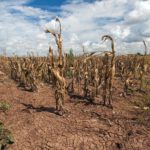
Rutgers-led study examines role of stationary low- and high-pressure systems Global warming is projected to spawn more extreme wet and dry weather around the world, according to a Rutgers-led study. Those extremes include more frequent dry spells in the northwestern, central and southern United States and in Mexico, and more frequent heavy rainfall events in […]
Earth in Balance
Accelerating changes in the climate are a growing concern. Scientists at the Rutgers Climate Institute are evaluating the peril on many fronts. Jennifer Francis was 22 years old when she and her future husband embarked on a five-year sailing voyage around the world that forever altered her life. Francis had always nurtured an abiding interest in the […]
What You Need to Know About the Latest U.N. Climate Change Report
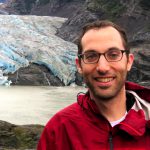
Climate scientist Robert Kopp explains the findings of the latest report by the Intergovernmental Panel on Climate Change including the need to achieve net-zero carbon emissions The United Nations scientific panel on climate change recently released a major report that examined the benefits of trying to limit global warming to 1.5 degrees Celsius above nineteenth-century […]
Rutgers Center for Lipid Research holds Symposium “Lipid Diversity and Human Disease”
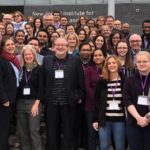
On November 9, 2018 the Rutgers Center for Lipid Research (RCLR) held its fourth annual symposium, with this year’s theme “Lipid Diversity and Human Disease.” Chaired by Judith Storch, distinguished professor of nutritional sciences and George M. Carman, board of governors professor of food science and founding director of the Center, the symposium brought together […]
Babies Born at Home Have More Diverse, Beneficial Bacteria, Study Finds

Hospital care may affect newborns’ gut flora, which influence health Infants born at home have more diverse bacteria in their guts and feces, which may affect their developing immunity and metabolism, according to a study in Scientific Reports. Understanding why babies born at home have more diverse microbiota for at least a month after birth, […]
Student Food Sustainability Fair: Making Smart, Environmental Food Choices
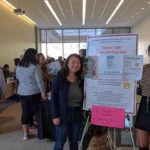
By Dorothy Lee (SEBS’19) – Department of Ecology, Evolution and Natural Resources The Food Sustainability Fair—held on World Food Day, October 16th—aimed to educate students about the cycle of food: before the plate, on the plate, and beyond the plate. I wanted to engage students in learning more about where food comes from and where […]
New Jersey Climate Adaptation Alliance Wins Coastal and Ocean Champions Award
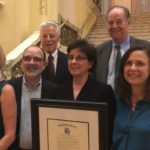
The New Jersey Climate Adaptation Alliance (NJADAPT) received the 2018 Coastal and Ocean Champions Award from the Urban Coast Institute at the institute’s 14th annual reception celebrating 40 years of New Jersey’s Coastal Management Program on Oct. 9 at Monmouth University. The event honored six individuals who have made significant contributions to the program and to the […]
Global Sea Level Could Rise 50 Feet by 2300, Says Study Managing Coastal Risk
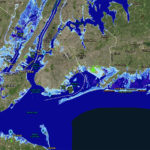
Global average sea-level could rise by nearly 8 feet by 2100 and 50 feet by 2300 if greenhouse gas emissions remain high and humanity proves unlucky, according to a review of sea-level change and projections by Rutgers and other scientists. Since the start of the century, global average sea-level has risen by about 0.2 feet. […]