

Rutgers researchers will study small ocean processes with big consequences At sea, their days will begin in darkness. Before dawn, Rutgers oceanographers Joe Gradone and Corday Selden expect to be on deck aboard the research vessel Falkor (too), preparing instruments, reviewing data and directing the first collection of water samples of the day. Related: Read more […]
Research
Damaging Coastal Storm Conditions Have Become Twice as Frequent at a New Jersey Beach Since 1979

A Rutgers study offers evidence of increasing erosion risk along the Mid-Atlantic coast Storm conditions capable of causing major coastal erosion at New Jersey’s North Beach on Sandy Hook are occurring about twice as often as they did in 1979, according to Rutgers researchers. The finding offers new evidence of increasing frequency of storm impacts […]
The Hidden Forces Shaping the Jersey Shore

A Rutgers scientist explains how dark sand, clear water, sudden cold spells and other forces continually reshape the coast The Jersey Shore may look familiar from summer to summer, but it is never truly fixed. It is an evolving coastal system in which sand color, beach width, water clarity and even ocean temperature can change […]
Rutgers Oceanographers Prepare to Take the Helm at Sea

Two early-career scientists will lead an international team on a 25-day expedition in the Atlantic Ocean Oceanographers Joe Gradone GSNB’25 and Corday Selden are preparing to step into the most consequential assignment of their careers so far. On Aug. 7, they will board the research vessel Falkor (too) in Bridgetown, Barbados. Two days later, the ship will […]
A Historic Ocean Observatory Off the Jersey Shore Returns to Service

A compact offshore research platform has been deployed off the Jersey Shore, revitalizing the historic Long-Term Ecosystem Observatory (LEO) site and advancing a new era of ocean research, education and marine innovation in New Jersey. Anchored about three miles offshore of the Rutgers Marine Field Station in Tuckerton, N.J., the platform, known as the PowerBuoy®, […]
Are “Eco-Friendly” Plastics Really Better for the Environment?

You’ve probably seen products labeled “biodegradable” or “compostable” at the store and assumed they were better for the planet than regular plastic. But a new study suggests it’s not that simple. Researchers reviewed dozens of studies on bioplastics — plastics made from plant or biological materials rather than fossil fuels — to find out whether […]
Antarctic Plankton Are Adapting to a Brighter Ocean — And It’s Telling Us Something Important About Climate Change

Tiny plant-like organisms (phytoplankton) living in the ocean waters around Antarctica are changing the way they handle sunlight — and the reason why reveals just how much climate change is reshaping one of Earth’s most remote ecosystems. A new study published in the journal Limnology and Oceanography found that over the past 27 years, microscopic […]
World Cup Will Be Played on Rutgers Turfgrass

While soccer fans watch their favorite teams compete at this summer’s World Cup, Rutgers University’s plant biologists will be looking under the players’ cleats—eyeing the lush, green natural turfgrass they created. Ten of the tournament’s 16 soccer stadiums in the United States, Canada, and Mexico hosting the World Cup will feature cultivated varieties (cultivars) of […]
Urban Rodents May Be Evolving Against Common Poisons

For years, pest control professionals throughout the Northeast have reported a troubling pattern. In some neighborhoods, rodents seemed increasingly more difficult to eliminate, even when standard control methods were used. Now researchers at Rutgers University believe they may know one reason why. A study found that 84% of house mice sampled from urban areas in […]
Can Financial Tools Save Biodiversity? A New Review Says “Not So Fast”
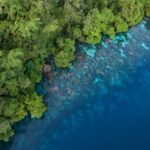
The world is losing plants, animals, and ecosystems at an alarming rate, with several causes of this biodiversity decline including habitat loss, climate change, and overexploitation. However, reversing these trends will likely require substantial amounts of funding. Experts estimate the gap between what’s currently being spent on biodiversity protection and what’s actually needed is at […]