
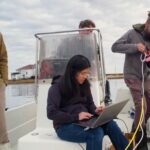
Creativity is essential in every step of the scientific process, asserts a team of Rutgers researchers. To illustrate their point, they have put together a short film showing how biologists, chemists, physicists, mathematicians and engineers converge and brainstorm at every stage of the scientific effort to better understand the carbon cycle in the ocean. The […]
Rutgers Center for Turfgrass Science Hosts 33rd Annual Turfgrass Symposium

Rutgers Center for Turfgrass Science hosted the 33rd Annual Turfgrass Symposium on March 14, drawing close to 90 attendees to the hybrid event, including participants via Zoom from France, Finland, United Kingdom, and several U.S. states, like Oregon, Virginia, Texas, Maryland, Tennessee, and North Carolina. Keynote speaker was John Sorochan, Distinguished Professor in the Department […]
Fertilizer Recommendation Support Tool Launches Nationwide to Digitize Crop Nutrient Management
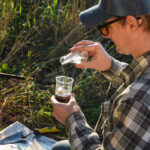
Project partners, which included Rutgers Cooperative Extension, announced the nationwide release of its Fertilizer Recommendation Support Tool (FRST), a decision-aid that provides an unbiased, science-based interpretation of soil test phosphorus and potassium values for crop fertilization. The FRST project is a collaboration of more than 100 soil science and agronomic professionals representing nearly 50 universities, […]
Start-up Innovator W2 Climatech Joins Rutgers EcoComplex’s WindIgnite Program
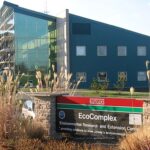
Rutgers EcoComplex, the university’s Clean Energy Innovation Center, and W2 Climatech, a start-up focused on developing eco-friendly anti-icing technology for wind turbines, announces its participation in the Rutgers WindIgnite Offshore Wind (“OSW”) Supply Chain Accelerator Program. Through this partnership, W2 Climatech and Rutgers will advance their shared goals and objectives in the fields of renewable […]
New Jersey FoodTech Conference 2024 to be Held at Rutgers on June 26
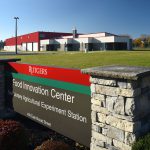
Rutgers University’s Food Innovation Center, the New Jersey Economic Development Authority, along with Middlesex County, announce the New Jersey FoodTech 2024 Conference, which will be held on June 26 at the Rutgers College Avenue Student Center, from 8 a.m. to 4:30 p.m. The conference costs $50 with registration by June 24. Registration is free for Rutgers […]
Anne Nielsen: A Childhood Interest in Bugs Leads to Career as a Woman in Science

Rutgers groundbreaking women researchers are making history and making a difference in the world every day. From serving as mission head for NASA’s next space telescope to creating nanorobots to target disease and studying the survival of orangutans in Borneo – one of our closest living relatives – they are advancing our understanding of the natural […]
2023 NJAES Annual Report Available for New Jersey Stakeholders
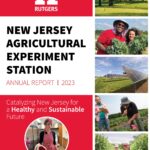
The Office of the Executive Dean of Agriculture and Natural Resources, Laura Lawson, is pleased to announce that the 2023 NJAES Annual Report is available online and in print. The report, “Catalyzing New Jersey for a Healthy and Sustainable Future,” offers snapshots of the research and extension activities of the experiment station over the past […]
Announcement: Janine Spies Joins RCE as Statewide Program Leader in Fruit IPM
Announcement from Nicholas Polanin, chair, Department of Agriculture and Natural Resources (ANR) I am pleased to announce the following addition to our Faculty within the Department of Agriculture and Natural Resources, beginning her role within Rutgers Cooperative Extension, effective March 1. Dr. Janine M. Spies joins us as the Statewide Program Leader, Assistant Professor, County […]
Retired Faculty and Staff Reconnect at Annual Luncheon on Cook Campus

On a clear, sunny day in December, retired faculty and staff from the School of Environmental and Biological Sciences (SEBS) and the New Jersey Agricultural Experiment Station (NJAES) joined Executive Dean Laura Lawson, faculty, staff and students in the Rectangle Room at Neilson Dining Hall for the annual Retired Faculty and Staff Luncheon. Student ambassadors […]
Announcement: Kate Brown Begins New Role with RCE of Somerset County
Announcement from Nicholas Polanin, chair, Department of Agriculture and Natural Resources (ANR) I am pleased to announce that Kate L. Brown joins Rutgers Cooperative Extension, Somerset County, as an Assistant Professor, County Agent III, effective March 1. For the past three years, Kate has served as the Agriculture and Natural Resources Program Associate in Burlington […]