

The Middlesex Business Summit 2025 attracted hundreds of New Jersey’s visionary business leaders, entrepreneurs, advisors and government officials on October 9, 2025, at the Heldrich Hotel and Conference Center in New Brunswick. Themed “Thriving Through Change: Business, Innovation, and the Future of Work,” the business conference featured presentations on the groundbreaking efforts underway to develop […]
SEBS
Joyce Carlson Retires After a Quarter Century of Service at Rutgers

Joyce Carlson, senior executive assistant in the Office of the Executive Dean at the School of Environmental and Biological Sciences (SEBS), has retired after a 25-year career at Rutgers University. In recognition of Joyce’s dedication to creating a welcoming environment and supporting the SEBS/NJAES community, a retirement gathering of her family and Rutgers colleagues was […]
Scientists Meet in Cape Town to Plan Future Climate Intervention Research

Scientists around the world are studying different ways we might respond to climate change, including controversial approaches called solar radiation modification (SRM), which aims to reflect some of the sun’s energy back to space to cool the Earth. To better understand how these approaches might work, researchers need to run complex computer simulations using climate […]
In a World First, Autonomous Robot Glider to Circle the Globe in Historic Ocean Mission

Guided by the rhythms of the sea and the promise of discovery, Teledyne Marine and Rutgers University set Redwing, an autonomous underwater vehicle, on its journey on Friday, Oct. 10, leading to its launch into the Atlantic Ocean off the coast of Martha’s Vineyard in Massachusetts. The launch marked the beginning of a five-year mission […]
Nutritional Sciences Teaching Kitchen Celebrates a Year of Success with Meaningful Collaborations

Since its renovation and grand opening just over a year ago, the Teaching Kitchen, housed on the second-floor foods lab in Davison Hall on the Cook/Douglass campus, has truly hit its stride. Staying true to the School of Environmental and Biological Sciences (SEBS) mission of hands-on, collaborative learning to life, the space has become a […]
Abbey Isaac SEBS’25 Helps Transfer Students Navigate the Journey to Rutgers
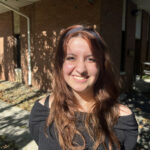
Transferring to Rutgers University from a New Jersey community college is a common and successful pathway for many students, aided by statewide articulation agreements that are designed to streamline the process. Abbey Isaac SEBS’25 has made that transition and feels she has a lot to offer other students contemplating that transfer journey. Right out of […]
SEBS Gilman Scholars Embarked on Transformative Global Experiences

Three students from the School of Environmental and Biological Sciences (SEBS) were among a record 20 Rutgers students awarded a Benjamin A. Gilman International Scholarship. Named in honor of the late Congressman Benjamin Gilman, a champion for international education, the scholarship was established in 2001 by the U.S. Department of State’s Bureau of Educational and Cultural […]
Keeping Oyster and Clam Farms Safe from Disease

A new study in Aquaculture looked at how tiny oysters and clams (called seed) can carry diseases when moved between hatcheries and farms. The authors wanted to find out which life stages are most at risk, and how careful water treatment can help protect both farmed and wild shellfish. David Bushek, an affiliate of the […]
What Happens When Wind Farms Get Old?

As more wind farms around the world get older, big decisions need to be made: should they keep running, be upgraded with new parts, or be shut down completely? Answering these questions requires accurate assessments of their reliability—how frequently failures occur and how costly those failures are. A new study in the journal Wind Energy […]
What Bees Can Tell Us About Conservation and Land Use

A new study has challenged a long-held belief in ecology: that a bee’s body size determines how far it travels and, in turn, how much land around it matters. The authors of the study, published in Ecography, tested this idea—called the “mobility hypothesis”—by analyzing 84 species of wild bees across 165 sites in the northeastern […]