
![[Subscribe via RSS]](https://sebsnjaesnews.rutgers.edu/wp-content/uploads/2013/06/rss-subscribe-button.png)
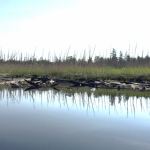
Higher groundwater levels from sea-level rise and increased flooding are likely the most important factors Why are “ghost forests” filled with dead trees expanding along the mid-Atlantic and southern New England coast? Higher groundwater levels linked to sea-level rise and increased flooding from storm surges and very high tides are likely the most important factors, according […]
Ecology, Evolution and Natural Resources
Overfishing of Atlantic Cod Likely Did Not Cause Genetic Changes
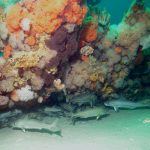
Study suggests reducing fishing and addressing environmental changes would help cod recover Overfishing likely did not cause the Atlantic cod, an iconic species, to evolve genetically and mature earlier, according to a study led by Rutgers University and the University of Oslo – the first of its kind – with major implications for ocean conservation. […]
SEBS First-Generation Students Get a Leg up Through Academic Mentoring Class
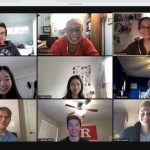
Knowing how to launch and navigate a successful college career is challenging even for the most astute students. For students who enter academia with little knowledge of what to expect, college can feel like a quagmire. This is often the case for first-generation students – those who are the first in their immediate family to […]
Steven Handel and Rachael Winfree Elected 2021 Ecological Society of America Fellows
Steven Handel, Distinguished Professor, and Rachael Winfree, professor, Department of Ecology, Evolution, and Natural Resources, were elected 2021 Fellows of the Ecological Society of America (ESA) for their contributions to the science of ecology. ESA Fellows, who are elected for life, are members who have made outstanding contributions to a wide range of fields served by the […]
Developing a Restoration and Adaptation Plan for New Jersey’s Coast
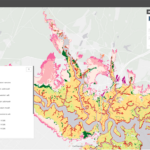
A team led by Rutgers University is working with the New Jersey Department of Environmental Protection (NJDEP) to develop a Coastal Ecological Restoration and Adaptation Plan (CERAP) for New Jersey’s coastal marshes, estuaries and back-bays. The CERAP project team, which was awarded a $150,000 grant from NJDEP, includes the Rutgers University Center for Remote Sensing […]
Cleaning up Southern Barnegat Bay-Little Egg Harbor
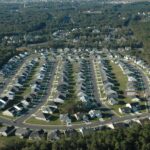
By Rick Lathrop, Director- Rutgers Center for Remote Sensing & Spatial Analysis Helping guide investments in ecosystem health that also benefit local communities is smart public policy. Barnegat Bay on New Jersey’s central coast is recognized as a nationally significant coastal system and was designated as 28th National Estuary Program site by U.S. Environmental Protection […]
A Win for New Jersey’s Raritan River
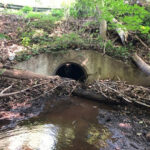
Helping guide investments in climate resilience that also benefit ecosystem health is smart public policy. Rutgers Sustainable Raritan River Initiative is partnering with the New York-New Jersey Harbor and Estuary Program (HEP) to undertake an “Aquatic Connectivity Through Climate-Ready Infrastructure” project on the Lower Raritan River watershed. The project seeks to improve road-stream crossings at […]
Deadly White-Nose Syndrome Changed Genes in Surviving Bats
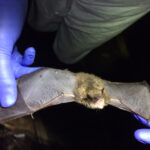
Study has big implications for management of bat populations. Scientists have found genetic differences between bats killed by white-nose syndrome and bats that survived, suggesting that survivors rapidly evolve to resist the fungal disease, according to a Rutgers-led study with big implications for deciding how to safeguard bat populations. White-nose syndrome has killed millions of bats in […]
Alumnus Jay Kelly: A Home-Grown Plant Savior
Inspired by SEBS Professors By Leslie Garisto Pfaff Jay Kelly’s earliest memories are of playing in the woods near his home in Middletown, New Jersey; he says he can’t remember a time when he wasn’t enchanted by nature. Today, his natural playground is much larger, encompassing the coasts and forests of New Jersey and beyond. […]
Rutgers Co-sponsors Global Microbiome Network First Latin American Symposium
The first Global Microbiome Network Symposium was launched by Rutgers University, Peruvian Universities Cayetano Heredia, and Universidad Catolica and the Microbiota Vault – a global non-profit initiative to conserve long-term health for humanity. The virtual symposium, held January 15-17, brought together local and foreign scientists that lead the fields of microbiology, anthropology, ethics, public health and bioinformatics, to teach, learn and discuss the importance of conservation efforts on […]