
![[Subscribe via RSS]](https://sebsnjaesnews.rutgers.edu/wp-content/uploads/2013/06/rss-subscribe-button.png)

Julia Van Etten’s “Couch Microscopy” gains mass Instagram following A doctoral student in ecology and evolution is turning microorganisms into art, and her hobby into a powerful tool for genomics studies at Rutgers University–New Brunswick. Julia Van Etten’s Couch Microscopy Instagram page has attracted close to 18,000 followers in a year and a half, thanks […]
Ecology, Evolution and Natural Resources
Conservation Success Depends on Habits and History

Rutgers-led study examines why some fisheries succeed at conservation and others fail The ghosts of harvesting can haunt today’s conservation efforts. Conserving or overharvesting a renewable resource like fish or other wildlife is often determined by habits and past decisions, according to a Rutgers-led study that challenges conventional expectations that the collapse of fast-growing natural […]
Go Fish!
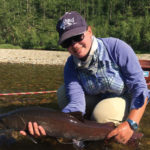
Olaf Jensen’s research on Mongolian fisheries has shed light on the effects of climate change, and opened a world of opportunity for students. Faculty Perspective: Olaf Jensen, Department of Marine and Coastal Sciences What initially attracted Olaf Jensen to Mongolia was its population of a unique fish called taimen. It’s the largest species of trout […]
Earth in Balance

Accelerating changes in the climate are a growing concern. Scientists at the Rutgers Climate Institute are evaluating the peril on many fronts. Jennifer Francis was 22 years old when she and her future husband embarked on a five-year sailing voyage around the world that forever altered her life. Francis had always nurtured an abiding interest in the […]
Student Food Sustainability Fair: Making Smart, Environmental Food Choices
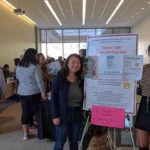
By Dorothy Lee (SEBS’19) – Department of Ecology, Evolution and Natural Resources The Food Sustainability Fair—held on World Food Day, October 16th—aimed to educate students about the cycle of food: before the plate, on the plate, and beyond the plate. I wanted to engage students in learning more about where food comes from and where […]
Brand New Trail Opens Access to Remote Section of Rutgers Ecological Preserve
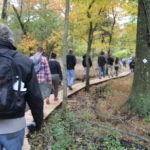
The Rutgers Ecological Preserve and Natural Teaching Area is a 360-acre wooded preserve located between Busch and Livingston Campus in Piscataway. The preserve–one of the largest contiguous patches of forest in the area–is habitat to diverse wildlife including wild turkeys, pileated woodpeckers, salamanders, red tailed hawks, herons, snakes, turtles, fish and foxes. The landscape covers […]
For Exotic Pets, the Most Popular Are Also Most Likely to be Released in the Wild

Among pet snakes and lizards, the biggest-selling species are also the most likely to be released by their owners – and to potentially become invasive species, according to a Rutgers study published today in the Journal of Applied Ecology. The study by Rutgers University–New Brunswick ecologists, including Julie Lockwood, professor in the Department of Ecology, […]
Recognizing a Decade of Research at RUMFS in Honor of Stacy Moore Hagan (GSNB ’99)
With roots at Stockton University, a memorial scholarship integrates with Rutgers as cooperative internship The Stacy Moore Hagan Memorial Scholarship is an endowment established by Roland Hagan, together with family and friends, to honor the memory of his wife, Stacy, to support an undergraduate in the marine science research program. Offered through Stockton’s School of […]
Fast Track, Young Alumni on the Move: SEBS Siblings: Chad and Aubrey Weibel
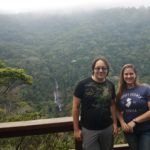
Reprinted from Explorations, Spring 2018 In this continuing series, alumni magazine Explorations profiles recent School of Environmental and Biological Sciences (SEBS) graduates who have launched successful careers and are making an impact on society. This installment features a dynamic brother-and-sister duo who got their start at SEBS. Aubrey Weibel SEBS’13, Animal Science, Pre-veterinary Research Track […]
Mapping Endangered Red Knots’ Remote Breeding Habitat
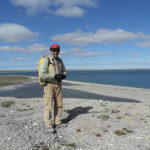
The “rufa” subspecies of Red Knot (Calidris canutus) travels from its breeding grounds in the Canadian Arctic to its winter habitat in South America and back each year, an incredible 15,000 kilometers each way. Its numbers have fallen precipitously in recent decades, and with such a broad range, determining what’s behind the shorebird’s decline is […]