
Dear SEBS students, Earlier this week we shared a post on our Instagram account of one of our associates at the Rutgers Cooperative Extension’s Department of Agriculture and Natural Resources in a farm field. The image of an African American woman in a farm field, especially out of context, has rightly caused concern and alarm. […]
Deadly White-Nose Syndrome Changed Genes in Surviving Bats
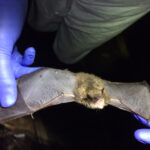
Study has big implications for management of bat populations. Scientists have found genetic differences between bats killed by white-nose syndrome and bats that survived, suggesting that survivors rapidly evolve to resist the fungal disease, according to a Rutgers-led study with big implications for deciding how to safeguard bat populations. White-nose syndrome has killed millions of bats in […]
Important Climate Change Mystery Solved by Scientists
Revised Holocene temperature record affirms role of greenhouse gases in recent millennia. Scientists have resolved a key climate change mystery, showing that the annual global temperature today is the warmest of the past 10,000 years – contrary to recent research, according to a Rutgers-led study in the journal Nature. The long-standing mystery is called the “Holocene temperature […]
Bingru Huang Creates and Serves as Editor-in-Chief of New Journal, “Grass Research”
Bingru Huang, Distinguished Professor in the Department of Plant Biology, was invited by the publisher, Maximum Academic Press, to create a new journal called Grass Research and serve as its editor-in-chief. The inaugural issue was published in January 2021 and included an editorial by Huang titled, “Grass Research for a Productive, Healthy and Sustainable Society.” […]
Black History Month: Albert Ayeni – Journey from Nigeria to the U.S.

February marks the start of Black History Month, among the most widely recognized heritage months in the cultural calendar of the U.S. It serves as a time in which the contributions of African Americans are celebrated and moreso in recent times, the continued struggle for racial justice in America is highlighted. To celebrate Black History Month in 2021, […]
Two SEBS Faculty Among Earth Leadership Program’s North American 2021 Fellows
Pamela McElwee, associate professor, Department of Human Ecology, and Malin Pinsky, associate professor, Department of Ecology, Evolution, and Natural Resources, are among the 2021 cohort of leading sustainability scientists selected as Fellows by the Earth Leadership Program (ELP), the global successor to the renowned Leopold Leadership Program, in partnership with Future Earth. McElwee and Pinsky […]
Zen and the Art of the Remote Conference Meeting
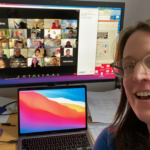
By Mary Whelan, assistant professor in the Department of Environmental Sciences. Organizing a creative remote meeting is a delicate maneuver. The resources available to us are limited, with attention being the scarcest commodity. Honestly, I cannot pay attention for a full hour, even when I am invested in the subject matter. Those of us who […]
Announcement: Update on Efforts to Support Diversity, Equity, and Inclusion at SEBS/NJAES
Announcement by Laura J. Lawson, Interim Executive Dean of the School of Environmental and Biological Sciences and Interim Executive Director of the New Jersey Agricultural Experiment Station. Dear SEBS and NJAES community, Last June, the SEBS and NJAES Executive Leadership Team posted a statement in support of racial and social justice in our community and […]
Update on Efforts to Support Diversity, Equity, and Inclusion at SEBS/NJAES
Dear SEBS and NJAES community, Last June, the SEBS and NJAES Executive Leadership Team posted a statement in support of racial and social justice in our community and our work. Words are not enough, therefore we are providing this update on our current actions and those planned in the coming months. As stated in our […]
Nuclear War Could Trigger Big El Niño and Decrease Seafood
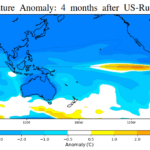
Unprecedented warming in equatorial Pacific Ocean could last up to seven years A nuclear war could trigger an unprecedented El Niño-like warming episode in the equatorial Pacific Ocean, slashing algal populations by 40 percent and likely lowering the fish catch, according to a Rutgers-led study. The research, published in the journal Communications Earth & Environment, shows […]