
James Simon, Xenia Morin, Lara Brindisi – Dept. of Plant Biology; Micah Seidel – SEBS
Research
Rising Waters on Our Coasts and What It Means for Public Access?
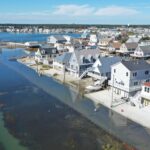
New Jersey law ensures the public’s right to access coastal shorelines and waters. To help people know where to access tidal waterways and get information about the amenities at each location, the state has an online map that shows over 3,900 public access points. However, the impacts of climate change are likely to affect public […]
In Bid to Make Child Cancer Treatments Safer, Scientists Find Possible Warning Signs of Severe Reaction

Rutgers researchers show importance of low vitamin A levels as harbinger of adverse event Scientists seeking a way to eliminate an adverse reaction to treatments for acute lymphocytic leukemia, a common childhood cancer, have found what they believe to be an early warning indicator. Mouse studies conducted by Rutgers researchers as part of a larger […]
Rutgers Scientists Identify Substance That May Have Sparked Life on Earth
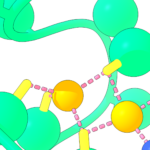
Research could provide clues to extraterrestrial life A team of Rutgers scientists dedicated to pinpointing the primordial origins of metabolism – a set of core chemical reactions that first powered life on Earth – has identified part of a protein that could provide scientists clues to detecting planets on the verge of producing life. The […]
SEBS Professors Study the Microbiology of Arsenic-Contaminated Agricultural Soils in the Mekong River and Red River Deltas
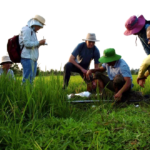
Distinguished Professor Max Häggblom, chair of the Department of Biochemistry and Microbiology, and professor John Reinfelder, Department of Environmental Sciences, visited Vietnam to initiate collaborative research on microbial arsenic metabolism in rice paddy soils with investigators at Can Tho University, College of Agriculture and Hanoi University of Science and Technology, School of Biotechnology and Food […]
Scientists think Nickelback helped kickstart life on Earth
Paul Falkowski and Jennifer Timm — Department of Marine and Coastal Sciences
Nickelback could have kickstarted life on Earth, says new study
Paul Falkowski, Jennifer Timm – Department of Marine and Coastal Sciences
‘Ancient metabolic reaction’ that may have kickstarted life on Earth unravelled by scientists
Researchers, including those from Rutgers University in the US, found a simple peptide molecule with two nickel atoms is one of the most likely molecules that sparked life on Earth. They have called the short protein molecule ‘Nickelback’ due to its backbone nitrogen atoms bonding with two nickel atoms. Rutgers researchers on the study include: Distinguished Professor Paul Falkowski and Jennifer Timm, a postdoctoral associate, in the Environmental Biophysics and Molecular Ecology Program, Department of Marine and Coastal Sciences
Study: Increased wildfire risk could delay ozone layer’s recovery
Alan Robock – Department of Environmental Sciences
Microscopic Chalk Discs in Oceans Play Key Role in Carbon Cycle by Propagating Viruses
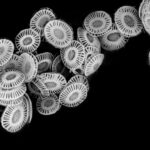
Rutgers-led research finds biomineral structures formed by marine algae foment viral infection, contributing positively to capture CO2 A Rutgers-led team of scientists studying virus-host interactions of a globally abundant, armor-plated marine algae, Emiliania huxleyi, has found that the circular, chalk plates the algae produce can act as catalysts for viral infection, which has vast consequences for […]