

The Environmental and Energy Study Institute invited Aziz Ezzat, an affiliate of the Rutgers Climate and Energy Institute and assistant professor of Industrial and Systems Engineering, to participate in a congressional briefing on the role of Artificial Intelligence (AI) in the climate and energy space that took place in a packed room of the Rayburn House Office Building in Washington, […]
Stable at -450°F: Why These Rare Earth Materials Matter for Clean Energy Tech

Rare earth elements (REEs) play a big role in modern technologies, including electronics, magnetics, and systems that generate clean energy. A new study explores the stability of some rare earth materials—specifically, rare earth oxychlorides—which is crucial for their future applications in clean energy and advanced electronics. Richard Riman, an affiliate of the Rutgers Climate and Energy […]
Josuel Barrios SEBS’29 – Raised on Rutgers Pride

Rutgers University welcomed more than 15,233 first-year and transfer students this fall, among them Josuel Barrios, a first-year student at the School of Environmental and Biological Sciences (SEBS), who was raised on Rutgers Pride. “I grew up with a lot of Rutgers spirit, going to the football games and Rutgers Day,” said Barrios, whose mom, […]
Smarter Microgrids Could Make Clean Energy More Reliable

Keeping the lights on during storms, blackouts, or equipment failures is a growing challenge as we shift toward renewable energy. A new study published in Computers & Industrial Engineering explores how advanced artificial intelligence (AI) can help design microgrids—localized energy systems that combine solar, wind, batteries, and other sources—to be both cost-effective and highly reliable. […]
Early-Career SEBS Faculty Forge New Connections at Back-To-School Retreat

“My biggest takeaway was that your Rutgers experience is what you make of it.” This comment from Meishka Mitchell, a new lecturer in the Department of Human Ecology, came after attending the SEBS Early Career Faculty Retreat in late August. In this event coordinated by the SEBS Office of Research and hosted at Rutgers Gardens, […]
Smarter Transportation Systems Could Cut Wait Times for Drivers

Finding a parking spot at a busy shopping mall or waiting to charge an electric vehicle can be frustrating. A new study published in IEEE Transactions on Intelligent Transportation Systems explores how to make these everyday challenges easier. The authors developed a computer framework called ‘Multi-Personality Multi-Agent Meta-Reinforcement Learning’, which helps transportation systems adapt faster […]
Tagging Fluke through the FiTREP Program Managed by Rutgers
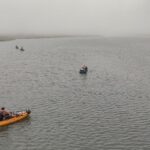
The original article, “Tagging Fluke,” is reprinted, with permission, by On The Water magazine. Paul Ziajski, owner of Great Bay Outfitters, is the primary author of this article. Chase Wunder, the Margaret A. Davidson Graduate Fellow at the Jacques Cousteau National Estuarine Research Reserve, who is pursuing a master’s degree in Ecology and Evolution at […]
New Way to Keep the Power On: Smarter Use of Local Energy

As we use more electricity for things like cars and heating, power distribution systems are becoming more stressed—especially as our electric grids get older—and power outages are becoming more impactful. But what if the local solar panels, batteries, or even electric cars and heaters themselves could help keep the lights on? That’s the big idea […]
How Nature Can Make Urban Dwellers Healthier

A study by Rutgers ecologist Myla Aronson and colleagues has found “overwhelming” evidence that increasing biodiversity in cities – establishing parks, installing native plants and encouraging sustainable landscaping – can significantly improve human health. Reporting in the science journal People and Nature, Aronson and coauthors described conducting a systematic review of more than 1,500 studies to synthesize […]
Rutgers Scientists Unveil Recent Studies on the Invasive Asian Longhorned Tick, a Substantial Threat to U.S. Livestock
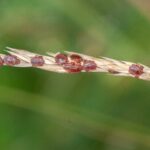
A pair of new studies led by researchers at the Rutgers Center for Vector Biology use genetic data to help trace the potential routes of introduction of the invasive (ALT), Haemaphysalis longicornis, into the United States, and to identify potential vaccine targets within the tick that can be exploited to protect vulnerable livestock populations. While […]