
This article was written by Leonard Bielory, M.D., an allergy specialist with Robert Wood Johnson University Hospital and Rutgers University… The month of May brings with it two things: Asthma and Allergy Awareness Month, and the official emergence o…
Home/Lawn/Garden
Betting on Nature to Solve the Bee Crisis
Simpelaar is one of hundreds of farmers turning to wild bees after nearly a decade of federally funded research failed to identify a solution or even a definitive cause for colony collapse, blamed on a variety of causes including pesticides and mites. A study released on May 13 by the government-funded Bee Informed Partnership showed winter losses in commercial bee colonies slowed this year to 23 percent from an average of 29 percent, but a spike in summer deaths pushed losses from April 2014 through this past March to 42 percent, the second-highest on record… With at least $15 billion in U.S. crops dependent on commercially raised honeybees, the government has allocated about $40 million a year to study the insects and other pollinators such as birds and bats, four times the 2006 level. What entomologists have found is that growers of some orchard and vine crops may not need commercial bee services at all. Wild bee species including bumblebees and blue orchard bees nest alone rather than in hives. “We have real good evidence that native bees are more effective for some crops, including apples and squash,” says Rachael Winfree, an entomologist at Rutgers University. “But they get no credit. No one raises them. They live on the margins.”
High Pollen Count Plagues Allergy Sufferers as Dry Streak Continues
Tuesday’s forecast does not contain good news for allergy sufferers. Another day of a high humidity and even higher temperatures coupled with high levels of tree pollen- particularly for oak, birch and maple trees- means itchy, watery eyes and irritate…
Dangerous Air Quality Alert Issued for Chicago Area Due to Historic Pollen Count
Brace yourself for misery- it’s officially “pollenpalooza” for Chicago. A dangerous air quality alert was issued for the city after the highest pollen level in more than two decades was recorded Friday morning… Doctor Leonard Bielory, a Rutgers University researcher, explains because of the overbearing winter that never seemed to cease, tree season started late. The spring allergy season, caused primarily by tree pollination, typically begins in late February. By March birch and oak pollen have been building up, which is why now that spring is finally here and the trees are in bloom the over-due release of pollen at such a historic level.
Rutgers Researcher: Bad Pollen Season on the Way
A Rutgers University researcher predicts a bad pollen season is about to hit allergy sufferers… Doctor Leonard Bielory says the tree season that started late due to the overbearing winter is about to release one of the strongest birch and oak pollen …
Rutgers EcoComplex Showcases Largest Living Wall to be Installed in N.J.
Inside the Rutgers EcoComplex Greenhouse in Florence, a vertical garden is taking shape. The leafy expanses- sprouting with ivies, ferns, orchids, flowering lipstick plants and nearly 120 other species- will eventually grace the interior of Rutgers University’s new Institute for Food, Nutrition and Health and set the record for the largest living wall in New Jersey… “It’s a living tapestry, a living piece of artwork,” said Michael Coraggio, CEO and founding principal of EcoWalls, which was tasked with the design and installation of the wall… EcoWalls is a Rutgers-incubated business located on the 500-plus acre campus of the Burlington County Resource Recovery Complex. It was founded in 2007 by Coraggio and Ryan Burrows, both of whom graduated from Rutgers School of Environmental and Biological Sciences. They have since expanded into a national company with displays at Walt Disney World, the San Diego Zoo Safari Park and the Philadelphia International Flower Show, among other venues.
Ramapo Tomato Seed an Option With Flavor
This article was written by Mona Bawgus, a certified master gardener and consumer horticulturist with Rutgers Cooperative Extension of Atlantic County.. With a goal to find the tomato that best represented what people remember as the old Jersey tomato,…
WeevilTrak Updates Make Monitoring, Control Easier
A research blog, additional research sites and new control strategies are among a host of upgrades to Syngenta’s WeevilTrak site designed to help golf course superintendents maximize efforts to control annual bluegrass weevil… Once registering for We…
Newark’s Cherry Blossoms Thrive with Rutgers’ Help
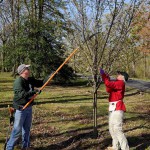
Arborist Paul Cowie (CC ’85) and Jan Zientek (CC’82), senior program coordinator of Rutgers Cooperative Extension in Essex County, play key roles in maintaining the nation’s largest collection of flowering cherry trees in Essex County’s Branch Brook Park, leading a group of dedicated Rutgers Master Gardeners from Essex County. Branch Brook was the first county park […]
Bed Bugs: Chemical Cover Caveats
Bed bug infestations exploded over the past 15 years or so, opening a relatively new market for all kinds of products. There are bed bug traps, so-called all-natural sprays, mattress encasements- thousands of options of varying worth. There are also chemical insecticides, including both over-the-counter and professional grade products. The most common class of insecticides used on bed bugs are pyrethtroids, a synthetic version of an ancient remedy made from crushed chrysanthemums… The bugs that were on the treated fabric for 10 minutes were significantly less likely to feed compared to those that sat on it for one minute, and when they did feed it was a significantly smaller amount of blood (there was no difference in the control set). And out of the females that sat for 10 minutes on the ActiveGuard, only one out of 52 laid any eggs… But here’s the caveat. Exposing a population of insects to sublethal amounts of insecticide may be akin to stopping an antibiotic treatment too early, which leads to drug-resistant bacteria. “Exposing bed bugs regularly to sublethal concentrations could promote greater levels of resistance,” says Rick Cooper, an entomologist at Rutgers University.