

Miles off the coast of New Jersey and New England, two major forces are converging: the rapid expansion of offshore wind energy and some of the most valuable fisheries in the United States. A new editorial published in Fisheries Oceanography takes stock of what we know — and what we urgently need to find out […]
China’s Green City Gap: Why Some Urban Areas Are Racing Ahead While Others Fall Behind

Cities across China are transforming to become more environmentally sustainable, but this “green transition” is happening very unevenly—and new research reveals that the biggest gaps aren’t between provinces, but between cities within the same province. A study published in the journal Habitat International examined nearly 300 Chinese cities from 2004 to 2021 to understand why […]
One Size Fits All? Testing Coating Thickness for Solar Panels

As the world races to reduce fossil fuel use and combat climate change, solar energy has become the fastest-growing renewable energy source globally. But not all solar panels are set up the same way. Some are fixed in place, tilted toward the sun. Others track the sun’s movement throughout the day. And a newer type, […]
New Forecasting Model Could Help Unlock the Power of Large Offshore Wind Turbines

As wind turbines grow taller to capture stronger and steadier winds over the ocean, predicting how much electricity they’ll generate becomes more complex. A new study published in the journal Technometrics, one of the leading peer-reviewed journals in statistics and data science, introduces a powerful forecasting method designed specifically for these next-generation, ultra-scale turbines. The […]
Distinguished Professor George Carman Honored as ‘Crucial Gatekeeper’ of Lipid Metabolism
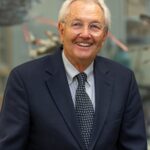
George Carman, Board of Governors Professor of Food Science, Distinguished Professor and founding director of the Rutgers Center for Lipid Research at the New Jersey Institute for Food, Nutrition, and Health, first met Herbert Tabor at an American Society for Biochemistry and Molecular Biology (ASBMB) meeting in 1992. When Carman became an associate editor with the Journal of […]
Scientists Develop New Catalyst That Turns Polluted Water Into Valuable Ammonia
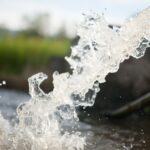
Ammonia is essential for making fertilizers that help feed the world, but producing it typically requires massive amounts of energy and releases significant greenhouse gases. Now, researchers have found a promising new way to create ammonia while simultaneously cleaning polluted water. Tewodros (Teddy) Asefa, affiliate of the Rutgers Climate and Energy Institute, and professor in the […]
A Surprising Ice Age from Three Million Years Ago Shows Lessons for Today

About 3.3 million years ago, during a period called the Pliocene epoch when Earth’s atmosphere contained CO₂ levels similar to today’s, a short but intense cooling event occurred that scientists call Marine Isotope Stage M2. Understanding what happened during this 25,000-year period matters today because it reveals how sensitive ice sheets are to changes in […]
Why Energy Efficiency Alone Won’t Solve Our Climate Problems

When countries make plans to fight climate change, they often focus heavily on energy efficiency—making buildings, appliances, and vehicles use less energy. But a new study suggests this approach might be missing the bigger picture. Affiliates of the Rutgers Climate and Energy Institute, Clinton Andrews, Distinguished Professor at the Bloustein School of Planning and Public […]
Empowering Young Innovators to Lead the Way to a Sustainable Future

What if the key to solving our planet’s biggest challenges lies with young people? A new study shows that empowering youth to develop innovative solutions could accelerate progress toward global sustainability goals—but only if we give them the right support and opportunities. Wendy Purcell, professor at Rutgers School of Public Health and affiliate of the Rutgers […]
Turning Liquid Fuel into Clean Energy: A New Cobalt Catalyst Could Help Power the Future

A new study has found a better way to turn a common liquid chemical into clean energy, and it could help us move away from fossil fuels. Kate Waldie, associate professor in the Department of Chemistry and Chemical Biology at Rutgers University and an affiliate of the Rutgers Climate and Energy Institute, is a co-author on […]