
![[Subscribe via RSS]](https://sebsnjaesnews.rutgers.edu/wp-content/uploads/2013/06/rss-subscribe-button.png)

In Antarctica’s frigid waters, tiny shrimp-like creatures called krill are the foundation of the entire ocean food web, feeding everything from penguins to whales. But how do these krill—and the microscopic plants they eat—end up in the right place at the right time? A new study reveals that ocean currents act like invisible highways, concentrating […]
Marine and Coastal Sciences
In a World First, Autonomous Robot Glider to Circle the Globe in Historic Ocean Mission

Guided by the rhythms of the sea and the promise of discovery, Teledyne Marine and Rutgers University set Redwing, an autonomous underwater vehicle, on its journey on Friday, Oct. 10, leading to its launch into the Atlantic Ocean off the coast of Martha’s Vineyard in Massachusetts. The launch marked the beginning of a five-year mission […]
Keeping Oyster and Clam Farms Safe from Disease

A new study in Aquaculture looked at how tiny oysters and clams (called seed) can carry diseases when moved between hatcheries and farms. The authors wanted to find out which life stages are most at risk, and how careful water treatment can help protect both farmed and wild shellfish. David Bushek, an affiliate of the […]
New Arctic Bacteria Could Help Us Understand Climate Change’s Impact on Carbon Release

In a recent study published in ISME Communications, researchers discovered five brand-new species of cold-loving bacteria in the Arctic tundra of northern Finland. Lee Kerkhof, professor in the Department of Marine and Coastal Sciences, and Max Häggblom, Distinguished Professor in the Department of Biochemistry and Microbiology—both affiliates of the Rutgers Climate and Energy Institute—are co-authors on […]
Researchers Track How Iron Deficiency Disrupts Photosynthesis in Crucial Ocean Algae

The next time you breathe, consider this: photosynthesis of algae, powered by iron dust in the ocean, made it possible. Now, a new Rutgers University study published in the Proceedings of the National Academy of Sciences pulls back the curtain on this vital process. Iron is a critical micronutrient for marine phytoplankton, the microscopic algae that form the foundation […]
ARIS Research Fellowship Convenes at Rutgers for Kick-off of Yearlong Program

The inaugural Center for Advancing Research Impact in Society (ARIS) Research Fellowship cohort convened at Rutgers University’s University Inn and Conference Center to kick off their journey, welcomed by Susan Renoe, Executive Director of ARIS and Associate Vice Chancellor for Research Development & Strategic Partnerships, University of Missouri, and Janice McDonnell, ARIS co-Principal Investigator and […]
Can Saving Fish and Whales Help Fight Climate Change?

A new study in Global Biogeochemical Cycles explores whether protecting ocean animals like fish, whales, and other marine life could help slow climate change. The authors reviewed current science to see how these animals store and move carbon in the ocean—a process that could help keep carbon out of the atmosphere. Grace Saba, an affiliate […]
NJ Youth Share Solutions to Combat Climate Change Effects in Their Own Communities
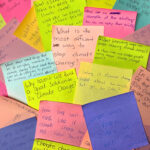
Why is climate change talked about so much but yet so little? When will people start to take this issue seriously? What is being done to reduce the effect of climate change? What small things can we do every day to prevent the increase of climate change? These are the questions New Jersey youth were […]
RUCOOL Researchers Find Decades of Warming and Salinity Changes in the Caribbean Sea

A new study led by Rutgers researchers reports long-term warming and shifts in salinity in the Caribbean Through‑Flow (CTF), a major ocean current that connects the tropics to the North Atlantic. The findings, published in Nature Scientific Reports, suggest that ongoing changes in this region may play a role in influencing broader ocean and climate […]
Clams Grew Slower in Warmer Ancient Seas, Study Finds

A new study reveals that warmer oceans thousands of years ago slowed the growth of an important clam species in the Adriatic Sea—giving us a glimpse into how marine life might react to future climate change. Fiorella Prada, assistant professor in the Department of Marine and Coastal Sciences and affiliate of the Rutgers Climate and Energy […]