
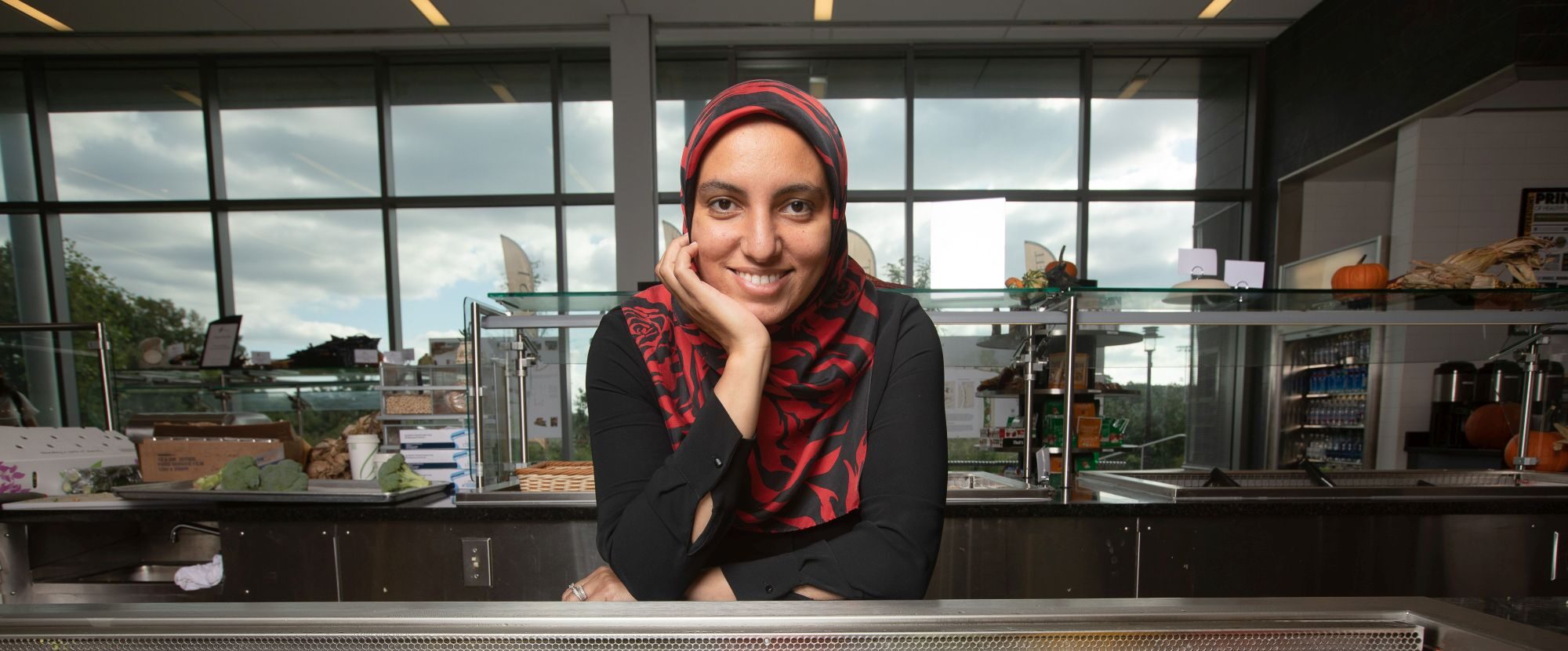
Sara Elnakib, chair of the Department of Family and Community Health Sciences, Rutgers Cooperative Extension. Photo: John O’Boyle.
Rutgers Cooperative Extension has co-authored new statewide guidelines aimed at clearing up confusion over what food can be safely and legally donated, a move expected to divert millions of meals from landfills to people in need.
The New Jersey Food Donation Guidelines, published online this fall, were developed by Rutgers and the Meal Recovery Coalition, a business-led, statewide initiative addressing food insecurity and food waste. Each year, the average New Jerseyan discards about 325 pounds of edible food, often because businesses and individuals are unsure what they are allowed to give away.
“Our goal is to ensure that food is used for the purpose it was grown or produced for,” said Sara Elnakib, chair of the Department of Family and Community Health Sciences at Rutgers Cooperative Extension and a lead author of the guidelines. “Wasting safe, edible food in a state where nearly 12 percent of the population is food insecure is both illogical and unethical.”
The guidelines clarify donation rules for a wide range of foods—from baked goods and prepared meals to canned items—and explain liability protections for donors who give food in “good faith” through certified food recovery organizations. They also outline safe storage and handling practices and provide a simple flowchart to help donors quickly determine whether food can be donated.
The effort supports the New Jersey Food Waste Reduction Act, which set a goal of cutting the state’s municipal food waste in half by 2030. Development of the guidelines was funded by a grant from the New Jersey Department of Environmental Protection and informed by best practices from other states and national experts, including Harvard University’s Food Law and Policy Clinic.
With New Jersey’s complex system of local health regulations, consistency was a priority. In the coming months, Rutgers Cooperative Extension will partner with the New Jersey Department of Health to train municipal food safety inspectors on the new standards, helping expand safe meal recovery statewide.
“These guidelines are about making it easier to do the right thing,” Elnakib said. “They help ensure that surplus food feeds people—not landfills.”
Read the full story, which originally appeared on Rutgers Today.