
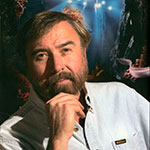
Professor of marine and coastal sciences Richard Lutz was presented the NOGI Award by the Academy of Underwater Arts and Sciences on Nov. 5 in recognition of his lifelong contributions to ocean sciences, and for making those sciences accessible to the public. Lutz is known for deep-sea research and is considered one of the world’s […]
Archives for 2015
Bracing for the Next Deluge
“I see a screw-up coming.” John Pomeroy shook his head in disbelief as the rainfall warnings arrived at his research station in southwestern Alberta. Environment Canada had predicted 100 millimetres of rain or more might fall in the Canadian Rockies. And now they were issuing a “high flow advisory, instead of the flood warning” that he fully expected. Where were the clanging alarm bells?… A compelling explanation comes from Jennifer Francis, a research professor at the Institute of Marine and Coastal Sciences at Rutgers University. Because the Arctic regions are heating up faster than any place on earth, she explains, the temperature difference between north and more temperate regions is shrinking… “Theory tells us that a decrease in the west-east flow tends to slow the eastward progression of waves in the jet stream,” she says. “Because these waves control the formation and movement of storms, slower wave progression means that weather conditions will be more persistent. In other words, they will seem more “stuck.”
Award-Winning Journalist Andrew Revkin Launches SEBS 250th Anniversary Focusing on the Anthropocene
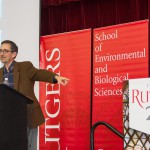
As we celebrate Rutgers 250th anniversary, will Rutgers see its 500th anniversary? This was one of the questions Executive Dean Bob Goodman challenged the audience to consider as the School of Environmental and Biological Sciences launched its 250th Anniversary celebration events under the theme, “Exploring the Anthropocene: The Age of Us,” on November 12. Tony […]
Green Infrastructure for Coastal Resiliency Focus of Conference
Since Superstorm Sandy, the most popular buzz-words among planners and municipal officials are “resiliency” and “green infrastructure,” said Lisa Auermuller as she opened Tuesday’s conference focused on those very words, held at the Jacque Cousteau Estuarine Research Reserve Education Center in Tuckerton. Planners, officials and concerned citizens from as far away as Staten Island and as close as Tuckerton came, hoping to “make a better world, even if global warming is a hoax,” to paraphrase a popular joke… Green infrastructure can be many things. It can be creating green spaces, new storm water practices and rules, building a rain garden, collecting water in a rain barrel or mitigating wetlands and shorelines with oyster reefs or coconut-fiber wave barriers… Chris Obropta from Rutgers University’s Water Resources Program and the Rutgers Cooperative Extension discussed green infrastructure in the urban landscape. He said it was his job to help people solve problems as cheaply as possible.
Healthy Olive Oil? Bitter is Better!
With the catapulting trend of organoleptic analysis (tasting) of olive oil, many consumers are being distracted from the point of including super foods such as extra virgin olive oil in our diet in the first place. Do we use it for the taste or for the many phenolic compounds bursting with medicinal qualities? Why not both?… As long as it is not rancid, all olive oil is good for you. It has monounsaturated fat, which is the “good” fat and can replace animal fats for health and longevity. The latest scientific research in olive oil focuses on the health promoting aspects and uses of phenolic compounds, in particular oleocanthal. Recent research at Rutgers University led by nutritional scientist Paul Breslin has shown oleocanthal to kill cancer cells while leaving healthy cells unharmed.
Going Green, Up On the Roof
This article is written by Barbara and Wolf Skacel, Rutgers Master Gardeners of Burlington County since 2014 and active volunteers and gardeners in their community… What is a green roof? It’s not a roof covered with moss, although it could be, if tha…
DEP: Barnegat Bay’s Health a “Mixed Bag”
While portions of Barnegat Bay’s ecosystem appear strained by pollution, life remains resilient under its murky waves… The risks to bay life if phytoplankton disappear would be catastrophic. Native phytoplankton is eaten by zooplankton and other creatures, which feed clams, crabs and fish, Buchanan said… Yet, the same species that lived in Barnegat Bay in 1973 are still here now, said Gary Taghon, a professor of marine ecology at Rutgers University… “Their abundances have shifted, but they haven’t disappeared,” he said during a panel discussion at Ocean County College where researchers and environmentalists discussed the studies’ results… The changes in the bay’s ecology are speeding up, and are now noticeable within the span of a single human lifetime.
The Good, the Bad and the Unexpected Results of Barnegat Bay’s Studies [VIDEO]
For three years, 11 research projects studied the brackish Barnegat Bay from top to bottom. At Ocean County College, they revealed their findings… The good: “Based upon the kinds of animals that are living in the sediment, their abundance, how tolerant they are to stresses that Barnegat Bay is in good shape,” said Gary Tacghon, Director, Marine Science, Rutgers University… The bad: “Bird reproductivity has declined with these personal watercrafts getting too close. The birds flush, they leave their nests, every time a boat comes too close, it could be a few minutes, that’s a couple minutes the birds are not sitting on their nests, and incubating the eggs,” said Eden Buenaventura, graduate student at Rutgers University… The state calls the Barnegat Bay research so important and so extraordinary, that it’s making it available to world and plans to use this research for years to come, because as it says, improving Barnegat bay won’t happen over night.
IFNH Student Ambassadors Present Research Poster at National Nutrition Conference
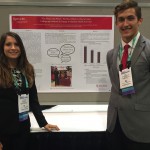
Student Ambassadors at the New Jersey Institute for Food Nutrition and Health (IFNH), Bill Cornelius and Taylor Palm (SEBS ’16), attended the 2015 Food and Nutrition Conference and Expo (FNCE) in Nashville, TN in October. As Nutritional Science undergrads-Dietetics option, these IFNH ambassadors had the honor of presenting a research poster at the conference. Their […]
New Rules Would Expand N.J. Bear Hunt
The Christie administration formally adopted a black bear management plan Monday that brings several major changes to New Jersey’s annual bear hunt, broadening the area where hunting can occur and potentially extending the hunt by an extra four days if the state’s targeted number of kills is not met… “Hunting is an important tool in maintaining an ecological balance with our black bear population and is necessary to reduce the potential for conflicts between bears and people,” said Bob Martin, commissioner of the state Department of Environmental Protection. “The comprehensive policy we have adopted is based on the most up-to-date science and population estimates, and continues to stress the importance of research and public education.”… Wildlife experts say that there is so much food here that bears here are having more cubs than usual. While the typical female black bear has a litter of one to three cubs, those in North Jersey tend to have three to six cubs, according to Brooke Maslo, a wildlife ecologist at Rutgers University.