
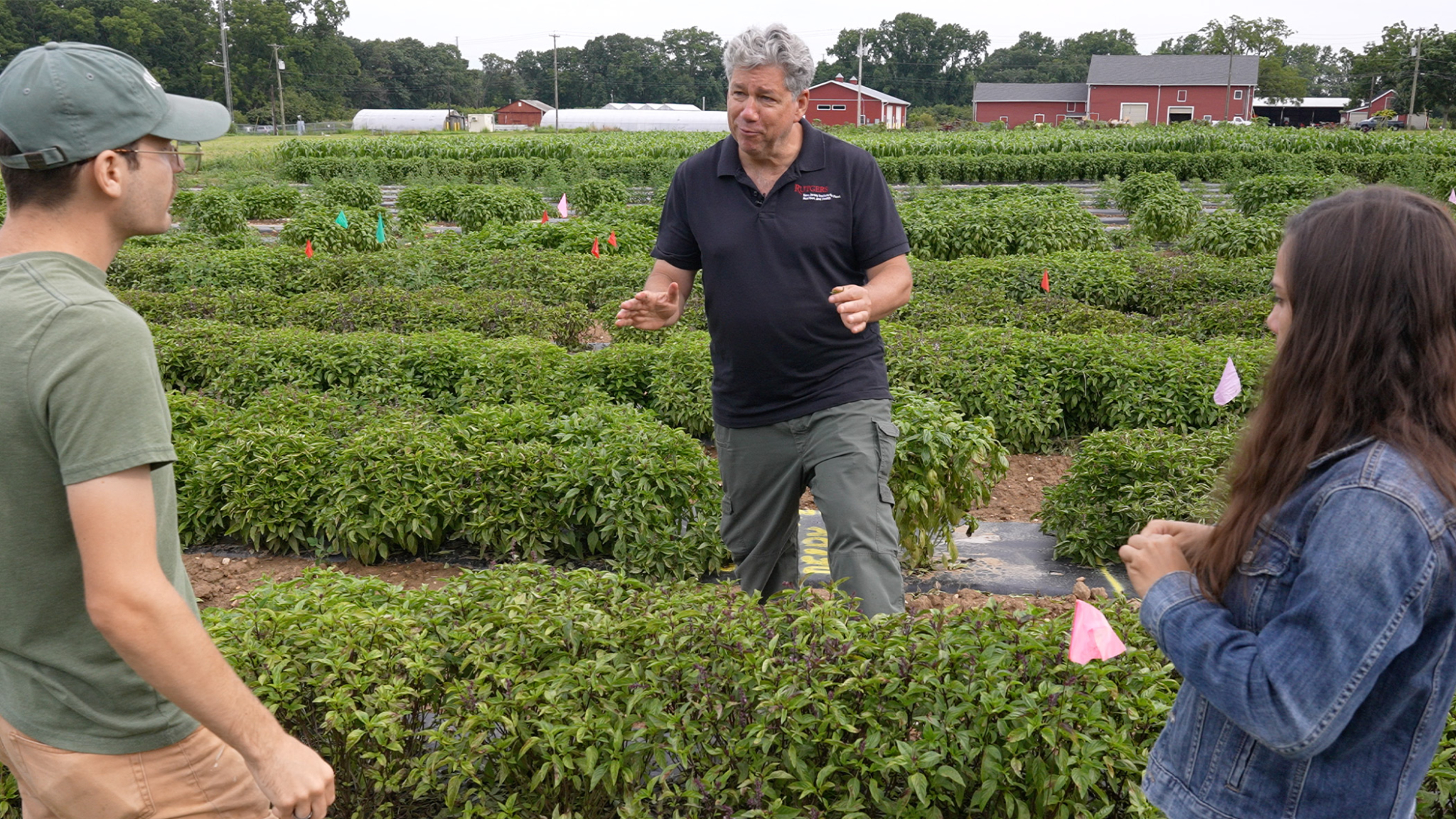
James Simon, Rutgers Distinguished Professor in the Department of Plant Biology in the School of Environmental and Biological Sciences, with students at Rutgers Horticultural Research Farm 2. Photo: Micah Seidel
The Rutgers plant biologist was elected to the 2025 Class of the National Academy of Inventors
When basil crops across the United States began collapsing 15 years ago, farmers were desperate. A mysterious strain of downy mildew began wiping out crops with no treatments, no way to stop the disease from spreading and no basil varieties that were resistant to the destructive plant disease.
That’s when James Simon, Rutgers Distinguished Professor in the Department of Plant Biology in the School of Environmental and Biological Sciences (SEBS) organized a team that spent more than a decade identifying the pathogen, developing a solution and breeding the first downy-mildew-resistant basil varieties that are now grown worldwide.
The achievement remains a celebrated agricultural breakthrough. As a result of his cutting-edge plant breeding research on basil and many other food crops and discoveries that impact human health, Simon was elected to the 2025 class of the National Academy of Inventors (NAI), one of the highest honors for academic innovators.
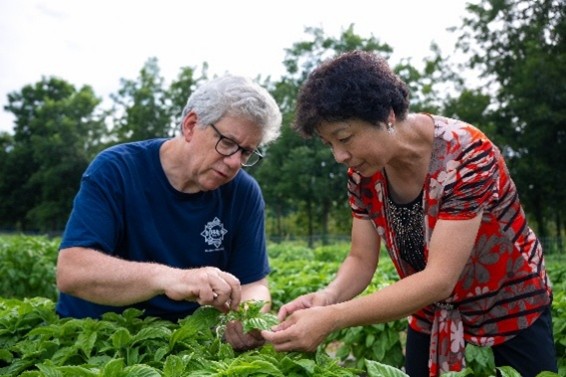
Rutgers breeders Jim Simon and Rong Di attend to sweet basil bred at Rutgers Hort Farm III.
Simon is one of 169 U.S. inventors elected to the 2025 Class of Fellows and the 14th Rutgers professor to be named and elected to the prestigious organization. He will be formally inducted during a ceremony in June in Los Angeles.
“NAI fellows are a driving force within the innovation ecosystem, and their contribution across scientific disciplines are shaping the future of the world,” said Paul R. Sandberg, president of the NAI.
Simon’s goal is to develop new plant varieties, strengthen food systems and identify natural products that can address serious health issues. His research includes breeding culinary herbs and medicinal plants, identifying natural compounds that treat inflammation, stroke risk, diabetes, anxiety, depression, and addiction, and discovering natural insect repellents that includes a catnip-based compound that is safe and effective.
Simon’s team is now breeding nutrient-dense vegetables, that surveys indicate are preferred by Latino, African and South East Asian communities. These types of specialty crops support New Jersey farmer livelihoods while providing culturally desired vegetables for New Jersey residents.
The NAI recognition, Simon said, makes him want to continue innovating. His team is advancing new natural pharmaceuticals, next-generation insect repellents, new generations of Thai and lemon basils, culturally preferred nutrient-rich crops, baby greens with new flavors and aromas, and vegetables that can withstand extreme heat and drought.
The full article first appeared in Rutgers Today.