
Josh Kohut – Department of Marine and Coastal Sciences
Search Results for: "Josh Kohut"
Rutgers’ underwater gliders keep a watchful eye on NJ’s water quality
Josh Kohut – Department of Marine and Coastal Sciences
A New Way to Predict Sea Breezes May Benefit Offshore Wind Farms
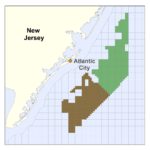
Rutgers-led team uses new technique to make wind a more reliable energy source The proposed, multimillion-dollar offshore wind farms industry may benefit from a Rutgers-led study that used sophisticated forecasting to understand sea breezes and make them a more predictable source of energy. The behavior of offshore sea breezes, and how the ocean influences them, […]
Unlike last late June, ocean temperatures are comfortable — for now
Josh Kohut, Department of Marine and Coastal Sciences
Rutgers Raritan River Consortium Awards Five Mini-Grants for Work in The Raritan River, Basin and Bay

The Rutgers Raritan River Consortium has awarded five mini-grants to support research by Rutgers faculty, staff and post-doctoral researchers on Raritan River, basin and bay resource issues.; All five mini-grants involve partnerships with Raritan stakeholders; four of them were given to faculty in the School of Environmental and Biological Sciences. The five recipients and their […]
Rutgers scientists changed the field of oceanography
Josh Kohut, Oscar Schofield, Scott Glenn – Department of Marine and Coastal Sciences
Rutgers Awarded Three of Seven Grants Totaling $5 Million to Study Climate Impacts on Commercial and Recreational Fisheries

NOAA’s Climate Program Office and its Coastal and Ocean Climate Applications (COCA) program—in partnership with the National Marine Fisheries Service (NMFS) Office of Science and Technology—competitively awarded seven grants projects last year that focused on increasing the understanding of climate-related impacts on fish stocks and fisheries. Three of the seven grants totaling roughly $5 million […]
After a below average start, N.J. ocean temperatures finally in the 60s
Memorial Day weekend is the start of the Jersey Shore’s summer season, but the ocean is typically not warm enough for most to enjoy. This year featured even cooler ocean temperatures than normal, courtesy of days of southerly winds preventing moderation… “Most people like it to be at least in the mid to upper 70s,” said Josh Kohut, assistant professor of Physical Oceanography at Rutgers University and founding member of the university’s Coastal Ocean Observation Lab (COOL).
Why Hurricane Irene fizzled as it neared New Jersey in 2011
A dynamic process that cools the coastal ocean and can weaken hurricanes was discovered as Hurricane Irene made landfall in New Jersey, according to a Rutgers University-led study published earlier this month… “This is a missing piece required to close the intensity gap for land-falling mid-Atlantic hurricanes in summer,” said Greg Seroka, a study coauthor and doctoral candidate in Rutgers’ Department of Marine and Coastal Sciences… “We used IOOS to assemble an unprecedented view of a land-falling hurricane during the highly stratified summer season. We discovered new processes responsible for rapid ocean cooling that reduce storm intensities,” said Scott Glenn, the study’s lead author and a professor at Rutgers…Article also quotes Hugh Roarty, Travis Miles, Oscar Schofield, Josh Kohut, Robert Forney and Yi Xu.
Experts Says Man-o-War Mean Business — But Don’t Be Afraid to Go Swimming
North Jersey oceanographers say swimmers should not be overly alarmist about the recent influx of the potentially dangerous man-of-war jellyfish-like creatures on the Jersey Shore, as they have so far been few and far between and may soon be gone with a shift in wind patterns… But if you see one, remember- it’s not nice to fool with Mother Nature. “When I hear ‘man-of-war,’ I pay attention. I feel the pain,” said New Jersey State Climatologist Dave Robinson. “I know what it feels like to be stung by a man-of-war. Ever have a hot iron put to your foot? It wasn’t in New Jersey. It was in the Florida Keys, while I was doing marine science field work.”… Recently, there have been strong and prevalent northeasterly wind patterns along the Jersey coast, according to Josh Kohut, associate professor of oceanography at Rutgers University in New Brunswick.