
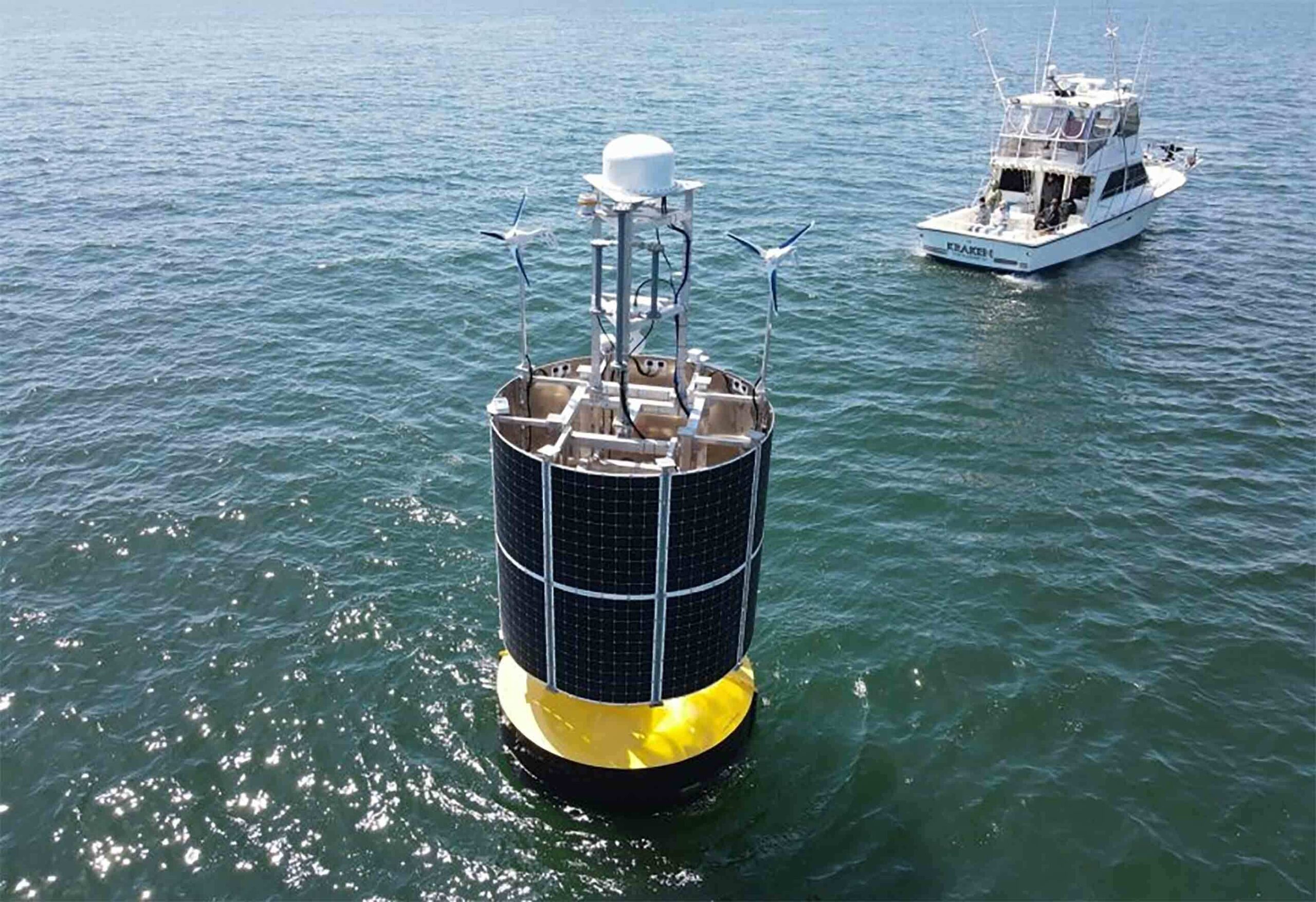
PowerBuoy®. Courtesy of Ocean Power Technologies Inc.
Rutgers University and Stockton University have joined forces with the New Jersey Economic Development Authority and marine technology company Ocean Power Technologies Inc. to restart and modernize a historic ocean research program off the Jersey Shore, marking a major investment in coastal science, workforce development, and marine innovation.
The partnership will revive the Long-Term Ecosystem Observatory (LEO), a nationally recognized ocean monitoring site located approximately three miles offshore from the Rutgers Marine Field Station in Tuckerton, New Jersey. The first phase of the effort includes the deployment of a high-tech PowerBuoy® research platform in early 2026 that will collect real-time data on ocean conditions and provide connection points for scientific and educational instruments.
By integrating academic research, state economic development initiatives, and advanced marine technology, the collaboration is expected to deliver significant economic and innovation benefits for New Jersey. The revitalized observatory will support cutting-edge coastal research, expand experiential learning opportunities for students, and provide infrastructure for startups and entrepreneurs developing solutions for the ocean economy.
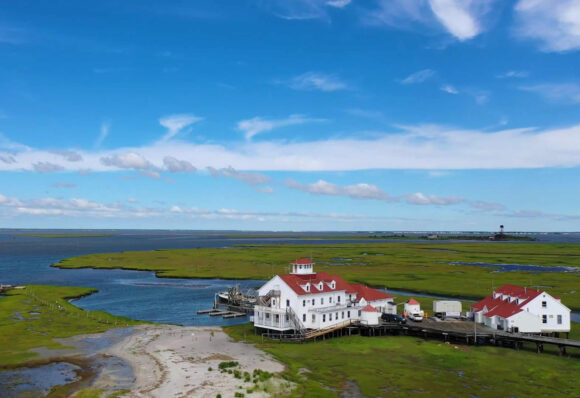
The Rutgers University Marine Field Station in Tuckerton, New Jersey, serves as a coastal research hub where scientists study ocean, estuarine, and coastal processes that impact New Jersey and the Mid-Atlantic region. Photo: Rutgers University
“The PowerBuoy® is set to usher in a new era of marine and coastal research in New Jersey,” said Josh Kohut, marine scientist and dean of research for the Rutgers School of Environmental and Biological Sciences and director of research for the New Jersey Agricultural Experiment Station. “It will be a critical element in the rebirth of LEO and in strengthening our ability to observe, understand, and respond to changes along our coast.”
Originally launched in 1996 as LEO-15, the observatory was among the first in the world to integrate cabled seafloor systems with autonomous underwater vehicles, delivering real-time data that supported groundbreaking research on storms, sediment transport, phytoplankton, fisheries, and coastal dynamics. Although the system evolved as technology advanced, the site has remained a cornerstone of Rutgers’ leadership in ocean observation.
The new deployment will modernize the LEO site with state-of-the-art monitoring capabilities, ensuring its continued role as a platform for scientific discovery, innovation, and collaboration.
Stockton University’s Marine Field Station is a key partner in the revitalization effort, providing expertise, vessels, and hands-on learning opportunities for students. Located along the Mullica River, approximately seven miles from Little Egg Inlet, the station supports research and teaching focused on near-shore and estuarine environments.
Read the full article, which first appeared in Rutgers Today.